
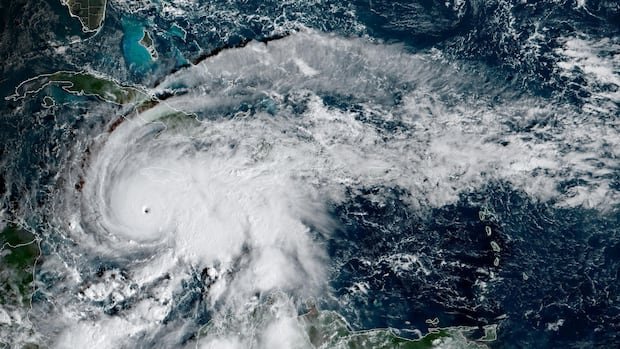

Hurricane Melissa, one of the most powerful storms ever recorded in the Caribbean, is expected to make landfall in Jamaica early Tuesday morning after undergoing rapid intensification, a phenomenon linked to climate change that is increasingly causing severe storms in the region. Initially classified as a tropical storm on Saturday morning, Melissa’s wind speeds surged from 115 to 225 kilometers per hour within a day, reaching Category 5 status by Monday morning. By the afternoon, the storm’s winds peaked at 281 kilometers per hour, making it the strongest storm globally in 2025.
Due to its slow movement, Melissa poses a significant threat, as explained by Akshay Deoras, a research scientist at the University of Reading’s National Centre for Atmospheric Science. The storm has already claimed six lives in the Caribbean, prompting Jamaica to brace for what could be its most destructive hurricane on record. Forecasts suggest some areas may experience up to a meter of rainfall.
Last year, Jamaica’s southern region suffered losses of approximately $200 million US, equivalent to 1.1% of the country’s GDP, after Hurricane Beryl, which also underwent rapid intensification. Deoras attributes Melissa’s strength to unusually high ocean temperatures in the Caribbean, with surface temperatures exceeding normal levels by two to three degrees. These warm conditions have fueled Melissa’s rapid development as it traversed the region over the weekend.
Oceanic warming is becoming increasingly prevalent worldwide, impacting climate patterns in unprecedented ways. A substantial heatwave in the Pacific Ocean has led to unusual fall temperatures in North America. In 2024, global sea surface temperatures were recorded as the warmest on record, further emphasizing the influence of rising oceanic temperatures on climate systems.
According to Shel Winkley, a meteorologist at Climate Central, climate change has significantly increased the likelihood of the warm ocean temperatures that have contributed to Melissa’s intensity. Climate Central’s analysis suggests that climate change has boosted Melissa’s top wind speed by approximately 16 km/h, potentially escalating the storm’s damages by 50%. Winkley notes that four out of the five hurricanes this season have undergone extreme rapid intensification, a pattern that was rare in the past but has now become more frequent, occurring at least once each season, if not multiple times.