
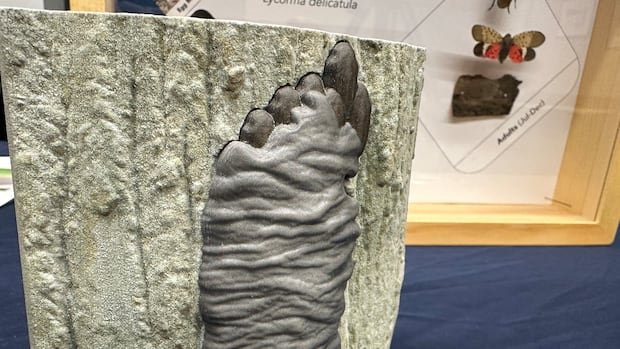

An egg mass of the spotted lanternfly may seem harmless, but the Invasive Species Centre is cautioning about the significant threat it poses to the wine and fruit-farming industries in the Windsor-Essex region.
Described as an inch-long mud smear on various outdoor surfaces, the spotted lanternfly, an invasive Asian insect, has been making its presence known in North America in recent years. The centre’s program coordinator, Emily Posteraro, held informative sessions at Windsor’s Ojibway Nature Centre to educate the public about this plant-eating pest.
While there have been only 10 sightings of spotted lanternfly specimens in southwestern Ontario in the past two years, the insect has been rapidly spreading throughout the eastern United States since 2014. Experts warn that if it migrates further north, it could have devastating effects on Canada’s vineyards, orchards, flower nurseries, and forestry.
The spotted lanternfly’s ability to thrive on over 100 types of vegetation, from vine crops to hardwood trees, coupled with its indiscriminate egg-laying habits on nearly any stationary object, makes it a formidable problem. As the adult lanternflies have completed their breeding cycle for the year and died off, the laid egg masses are set to hatch in the upcoming spring.
Given the high traffic of cargo and international movement in border regions like Windsor-Essex, vigilance is crucial. Residents are advised to check their vehicles and outdoor equipment for any signs of the spotted lanternfly, especially if traveling to areas with known infestations.
Originally from China and parts of Vietnam, the spotted lanternfly likely entered North America through international trade. Its adaptability has allowed it to outcompete native species, posing a significant ecological challenge.
In response to the threat, community members are encouraged to report any sightings of the spotted lanternfly to the Canadian Food Inspection Agency for early detection and rapid response efforts. Whether alive or dead, capturing the specimen and providing photographic evidence is essential for monitoring and control.
In addition to invasive insects like the spotted lanternfly, the City of Windsor is also tackling non-native plant species. A herbicide program targeting plants such as honeysuckles, European buckthorn, autumn olive shrubs, and the tree-of-heaven will be carried out this winter to curb their spread. The application will be directly applied to stumps and vines, with parks and paths remaining open to the public.
By remaining vigilant and proactive in reporting and controlling invasive species, communities like Windsor can work towards restoring ecological balance and protecting their local industries.