
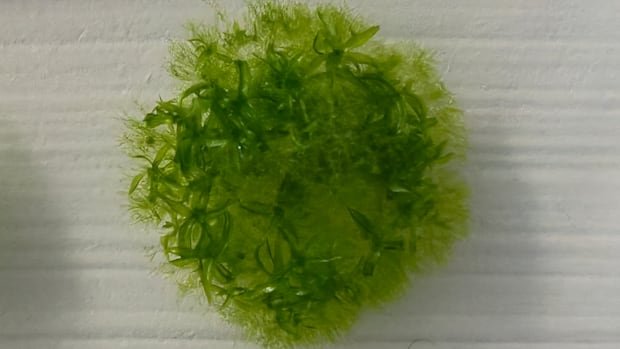

Space presents a challenging environment with its vacuum, extreme cold, intense ultraviolet radiation, and minimal oxygen levels. However, Japanese scientists have discovered a resilient type of moss that thrives despite these harsh conditions.
In a recent study published on Thursday, researchers sent a moss species known as Physcomitrium patens to the International Space Station (ISS) for a nine-month exposure to the rigors of space. The experiment involved testing three developmental stages of the moss: juvenile moss, brood cells, and sporophytes.
While not all stages survived the space conditions, the brood cells exhibited a higher survival rate enduring freezing temperatures for 30 days, with 80% of the sporophytes surviving. Lead researcher Tomomichi Fujita, also a professor at Hokkaido University, highlighted that the moss could endure prolonged exposure without growth, and upon return to Earth, approximately 90% of the spores successfully germinated in a lab environment.
The study contributes to the ongoing exploration of plant resilience in space, particularly in light of potential human colonization of celestial bodies like the Moon and Mars. Plants play a crucial role in sustaining life, providing nutrition, and potentially enhancing mental well-being for astronauts during extended space missions.
Researchers are further investigating potential changes in the moss spores due to their space exposure. Fujita envisions leveraging these findings to develop sustainable ecosystems on extraterrestrial surfaces, viewing the moss research as a pivotal step in advancing space botanical studies.