
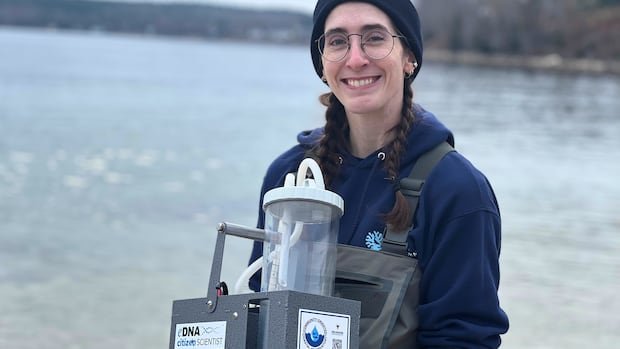

On a cloudy morning in November at Fox Point Beach near Hubbards, N.S., a group of five individuals wade into the ocean while waves gently touch their knees. Their purpose is to gather water samples for analysis at Dalhousie University’s laboratory to track marine species. The Community-Oriented Coastal Observatory is seeking volunteers to assist in collecting samples from various locations across the province.
Krish Thapar, who traveled from Dartmouth to participate, eagerly absorbed the instructions from PhD candidate Samantha Beal on using the sampling equipment and preventing contamination. Thapar viewed this as a valuable volunteer opportunity and a way to support local conservation initiatives.
Beal spearheads the project that mobilizes community members to collect coastal water samples for eDNA analysis to detect traces left by marine organisms. By filtering the water to capture DNA particles, Beal and her team can isolate and identify them.
The main goal of Beal’s initiative is to enhance understanding of the marine species inhabiting Nova Scotia waters and their migration patterns. Climate change impacts, such as rising ocean temperatures affecting species like lobster, are prompting shifts in marine animal movements towards colder waters, a trend Beal aims to monitor.
Volunteers across different communities are equipped with sampling tools by Beal to collect DNA samples from ocean water. These groups, spanning from Yarmouth to Louisburg, are being trained in preparation for collecting samples independently and sending them for analysis. The plan is to conduct sampling three times a year to track seasonal migration trends.
Thapar values his involvement in the project not only for his conservation interests but also for the opportunity to engage with nature and other volunteers. Beal continues to seek volunteers, particularly in regions like the Bay of Fundy, emphasizing the importance of more participants for the project’s success.