
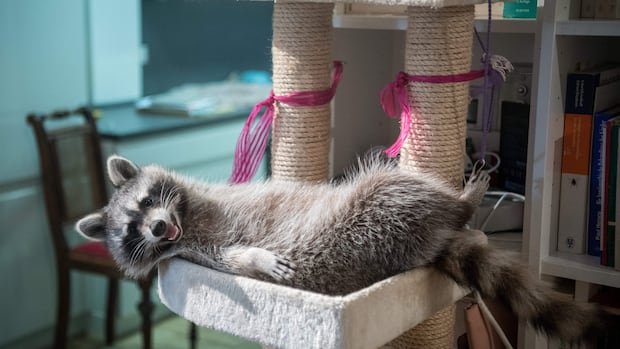

A recent study sheds light on the impact of urban environments on raccoons. While commonly associated with cities for their scavenging habits, raccoons are originally forest-dwellers with diverse diets ranging from nuts and berries to insects and fish. Although native to the Americas, they are not commonly found in Newfoundland and Labrador.
Researchers from the University of Arkansas at Little Rock discovered that urban raccoons are adjusting their diets to human food sources, suggesting a potential domestication process. The study observed physical changes in urban raccoons, notably shorter snouts, indicating an evolutionary shift towards coexisting with humans.
Domestication, a gradual process of adapting wild animals for human interaction, is evident in urban raccoons displaying neoteny and increased tolerance towards humans. These changes align with the concept of domestication syndrome, where animals develop traits favorable for living near humans.
Notably, the domestication of raccoons appears to have started naturally by living in close proximity to humans, rather than through intentional breeding practices. This phenomenon underscores the significant influence humans have on wildlife adaptation in urban settings.
Looking ahead, researchers speculate that future urban raccoons could exhibit further evolutionary changes, ultimately resulting in distinct characteristics compared to their rural counterparts. However, caution is advised against keeping wild raccoons as pets due to health risks associated with potential pathogens and parasites they may carry.