
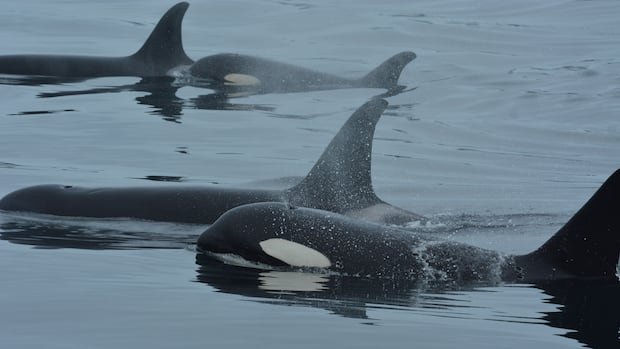

In a recent study focusing on the foraging habits of northern resident orcas off the coast of British Columbia, a group of researchers from Dalhousie University, the University of British Columbia (UBC), the Leibniz Institute, and the Hakai Institute encountered Pacific white-sided dolphins, initially causing some annoyance among the researchers.
The main objective of the study was to investigate how northern resident orcas locate food and to contrast this with the challenges facing the southern resident orca population. However, the unexpected appearance of the dolphins provided valuable insights into their collaborative foraging relationship with the orcas, as revealed in a new research publication in Scientific Reports.
Contrary to the common belief that dolphins are nuisance creatures that steal fish from orcas, the study led by Sarah Fortune, an assistant professor of oceanography at Dalhousie University, unveiled a different narrative. The researchers observed that the dolphins were actively assisting the orcas in hunting Chinook salmon, engaging in deep dives and communicating with the orcas during the process.
According to Andrew Trites, a professor at UBC and co-author of the study, video footage captured orcas following the dolphins on dives, indicating a coordinated effort between the two species. The researchers also noted that the orcas were listening to the echolocation signals emitted by the dolphins to locate salmon, demonstrating a unique partnership in the marine ecosystem.
The study highlighted the intricate nature of the collaboration between orcas and dolphins, showcasing how the dolphins’ scouting efforts helped the orcas identify and catch large Chinook salmon. The researchers observed instances where the orcas shared their prey with other members of their pod, while the dolphins scavenged on the leftover scraps, illustrating a mutually beneficial relationship.
Through a two-year field study conducted in the Johnstone Strait and Queen Charlotte Sound, the researchers utilized tags attached to orcas to gather underwater footage. The tags, which remained attached for several hours before detaching and transmitting data to satellites, provided valuable insights into the foraging behaviors of these marine mammals.
The study findings shed light on the intricate dynamics of marine ecosystems and emphasize the importance of understanding the collaborative relationships between different species. This research opens up opportunities to explore further questions regarding the ecological connections and mutual benefits that exist within the natural world.