
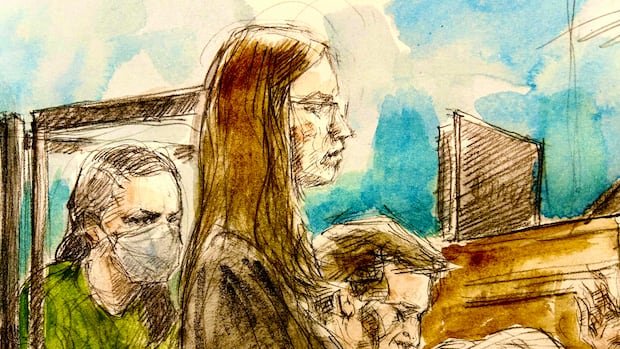

A forensic pathologist testified that during an autopsy on a 12-year-old boy under the care of two women in Burlington, Ont., the cause of death could not be conclusively determined. Dr. Michael Pickup, the deputy chief forensic pathologist in Ontario, mentioned potential causes of death such as hypothermia or cardiac arrest due to severe malnourishment. The two women, Brandy Cooney and Becky Hamber, have pleaded not guilty to first-degree murder and other charges related to the boy’s death.
The boy, known as L.L., was in the process of being adopted by Cooney and Hamber when he passed away in 2022, along with his younger brother, J.L. The trial is ongoing in the Ontario Superior Court, presided over by Justice Clayton Conlan, and is anticipated to continue through November.
Dr. Pickup’s autopsy report highlighted that there were no significant injuries or abnormalities in L.L.’s body. It was revealed that L.L. had ingested a medication called Venlafaxine, prescribed to treat various mental health conditions. Although the concentration of the medication in his system was higher than normal for therapeutic purposes, it was not lethal. Malnutrition was also considered a possible cause of death due to L.L.’s frail condition.
Various scenarios, including hypothermia, drowning, and smothering, were discussed as potential causes of death. When asked about a hypothetical situation involving a malnourished child experiencing hypothermia, Dr. Pickup acknowledged that hypothermia could have contributed to the boy’s death. The trial also mentioned the boy being found wet in a basement room, wearing a soaked wetsuit, raising questions about the circumstances surrounding his death.
The defense questioned Dr. Pickup about the presence of hypothermia indicators and the boy’s wet condition. While some clues pointed to possible hypothermia, it was uncertain why the boy was wet. Speculation arose regarding the pool of liquid found near the boy and the possibility of bodily functions occurring postmortem, though not common in such cases.
If you need mental health support due to the content of this report, resources in your province or territory are available for assistance.