
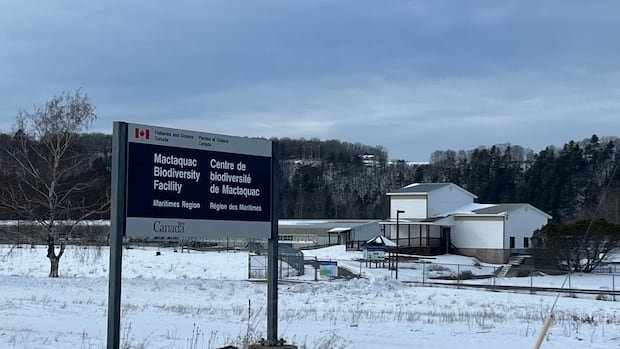

The closure of the Mactaquac Biodiversity Facility by the Department of Fisheries and Oceans (DFO) is facing criticism from the Wolastoqey Nation, Atlantic salmon scientists, and conservationists. Situated in French Village below the Mactaquac Dam on the St. John River in New Brunswick, the facility, along with a similar one in Coldbrook, N.S., is being shut down as part of government spending cuts.
The decision to discontinue the Atlantic salmon live gene bank program and related salmon-stocking activities, without consulting the Wolastoqey group representing six communities, has raised concerns. The group emphasized that the closure directly impacts the Wolastoqiyik people, their rights, and the salmon population in the river.
University of New Brunswick salmon biologist Tommi Linnansaari highlighted the critical work carried out at the Mactaquac facility, such as collecting wild brood stock, fertilizing eggs, and releasing baby salmon into different areas upstream. The closure of the hatchery would jeopardize salmon populations in the Tobique River and the Bay of Fundy.
David Roth, the New Brunswick program director for the Atlantic Salmon Federation, emphasized that the hatchery operations are vital for the survival of salmon populations in the St. John River. He expressed concerns that shutting down the hatchery and ending stocking programs would have catastrophic consequences.
The Wolastoqey Nation is assessing the potential impacts of the closure, including the loss of jobs, training opportunities, and setbacks to salmon conservation efforts. The group referred to an agreement signed in 1968 between the federal government and N.B. Power, highlighting the commitment to operate the Mactaquac Biodiversity Facility in line with the Mactaquac Project’s lifespan.
Despite the lack of clarity from N.B. Power and the federal fisheries department on the reasons for the closure, efforts are being refocused to meet obligations under the Species at Risk Act. Linnansaari and Roth both expressed hopes for the continuity of hatchery operations and emphasized the need for modernizing infrastructure to enhance salmon populations.
The closure of the Mactaquac facility poses a threat to decades of conservation efforts and the genetic diversity of salmon populations, underscoring the importance of sustainable practices to preserve the species for future generations.