
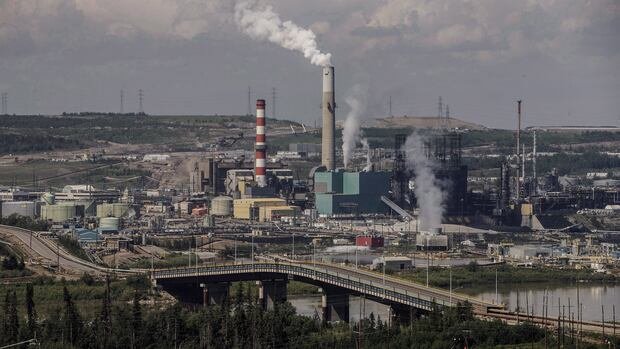

Growing interest is observed among American investors in the Canadian oil industry, fueled by a more positive stance from the country’s government and a perception that the Canadian sector offers more reliable returns in the future. Jeremy McCrea, a managing director at BMO Capital Markets in Calgary, characterizes this shift as a “rotation,” highlighting an increase in investment from the U.S. and a slight decrease from Canada.
Despite lower oil prices impacting investment sentiment, many portfolio managers remain interested in holding energy stocks, particularly in the Canadian sector which they view as having more potential compared to the U.S. McCrea notes that more U.S. investors are expressing a preference for Canadian energy investments. Currently, U.S. funds hold around 59% of Canadian oil and gas companies, up from 56% last year, while Canadian ownership has declined from 37% to 34%.
CEOs in the Calgary oil industry are witnessing this trend firsthand within their companies. Whitecap Resources CEO, Grant Fagerheim, mentions that approximately 66% of institutional investors in his company are now from the U.S., a significant increase from the previous year.
Brian Schmidt, CEO of Tamarack Valley Energy, points out that Canadian investors, especially pension funds, are showing reluctance towards the oil and gas sector, unlike their U.S. counterparts who are more open to investment opportunities. Schmidt highlights the disparity in investor engagement, noting that he finds it easier to schedule meetings in American cities compared to Canada. U.S. ownership of his company has risen to 40% from 20% before the COVID-19 pandemic.
The change in investment patterns began about a year ago, coinciding with a period where the federal Conservatives were leading in polls and promising policy changes to support the oil and gas industry. Though the federal Liberals were re-elected, Prime Minister Mark Carney pledged to position Canada as an energy “superpower,” signaling a shift in tone that has positively influenced investor confidence in the country.
Schmidt also credits the completion of the Trans Mountain Pipeline expansion for driving investor interest by enhancing the sector’s export capabilities. The economic dynamics of the Canadian oil industry compared to the U.S. have also contributed to the increased attraction for Canadian investments.
In the U.S., the cost of drilling new oil wells poses a challenge for companies as they require a higher oil price to justify the investment. With oil prices expected to remain below the threshold needed for profitability, U.S. oil production growth is anticipated to stall. In contrast, Canadian oilsands projects offer a more stable and cost-effective production model over several decades, making them an appealing investment option.
Canadian oilsands companies have shifted their focus towards shareholder returns rather than extensive capital projects, aligning with investor preferences. This strategy of generating cash and distributing it to shareholders is viewed as an attractive prospect by investors like David Samra from Artisan Partners. McCrea believes that the future outlook for the Canadian oil sector appears promising, attracting interest not only from U.S. investors but also from Europe and Asia.
Overall, the trend of increasing U.S. investment in the Canadian oil industry presents an optimistic outlook for the sector’s growth and development.