
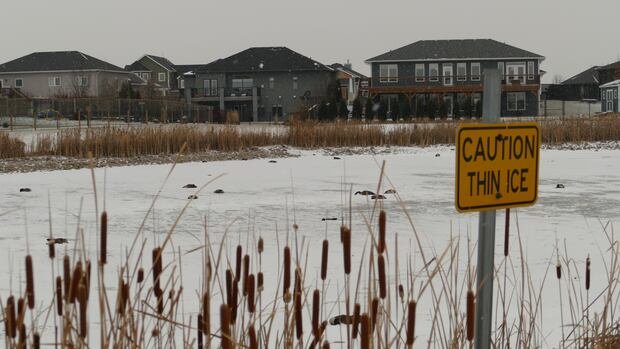

In a surprising turn of events, a Niverville resident was taken aback by the discovery of numerous deceased geese in the retention pond located in his backyard, with one even found on his back deck. The cause of death for all the geese was linked to an outbreak of avian flu.
Mason Goulet first noticed several Canada geese struggling to move on the icy pond about three weeks ago. Initially thinking some were stuck in the ice, Goulet later realized they were actually ill.
The Manitoba town of Niverville issued a statement on November 13, informing residents that the local goose population had been affected by avian flu, specifically the H5 strain. This virus is prevalent among wild bird populations, with H5N1 being responsible for some human cases.
Upon returning home after a brief absence, Goulet was shocked to find a dead goose on his porch, estimating it had been there for three to five days. Despite being advised by conservation authorities to leave it untouched for a week, concerns lingered among Goulet and his neighbors regarding potential risks to other animals, notably with eagles scavenging the carcasses.
Canadian Wildlife Service biologist Frank Baldwin noted that avian flu is naturally present in waterfowl, and the recent high mortality rates in Manitoba are unusual. Typically, such outbreaks peak after the geese have migrated for the season, a pattern seen in other regions like southern Ontario and Quebec, as well as parts of the United States during colder weather.
Baldwin, alongside wildlife technician Owen Andrushuk, visited the retention ponds in Niverville to strategize the cleanup efforts in collaboration with the provincial government and the town. A total of 165 carcasses, including the goose on Goulet’s deck, were removed in the cleanup operation.
While the Public Health Agency of Canada deems the virus low-risk to humans, precautions are still advised, such as refraining from handling dead birds and preventing pets from interacting with them. As the outbreak extends to both wild and domestic poultry across Canada, vigilance in handling birds and ensuring proper cooking of meat is crucial.
Hannah Wallace, a University of Manitoba researcher specializing in emerging viruses, highlighted that human cases of avian flu are primarily observed among individuals working closely with infected animals, such as those in poultry or dairy farms.
Regarding containment efforts, Wallace mentioned the challenges in controlling avian influenza within wild bird populations. Samples from the deceased birds will undergo DNA sequencing by the Canadian Food Inspection Agency for further analysis and monitoring of the situation.