
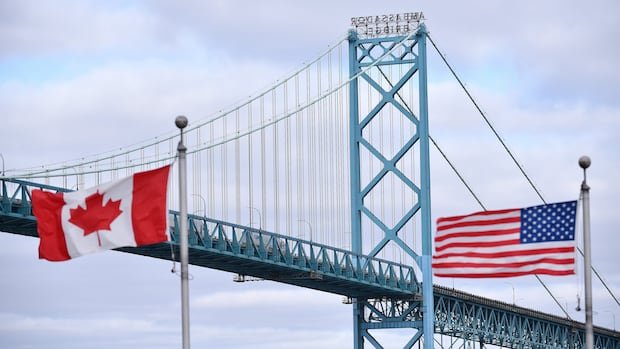

A significant number of Canadian travelers are avoiding trips to the United States, impacting the U.S. economy. According to a report by the U.S. Travel Association, international tourism spending in the U.S. is projected to decline by 3.2% in 2025, resulting in a $5.7 billion loss compared to the previous year. The decrease in Canadian visitors has been a key factor in this trend, which started when U.S. President Donald Trump resumed office, leading to trade tensions with Canada.
Recent data for October shows a notable drop in return trips by Canadians to the U.S., with a 24% decrease in air travel and a 30% decline in land travel compared to the same period last year. Canadians traditionally represent a significant portion of international tourists in the U.S., constituting 28% of the 72.4 million visitors in 2024.
The reduction in tourism revenue poses a threat to numerous jobs, as highlighted by Usha Haley, a management professor at Wichita State University. She emphasized the labor-intensive nature of the tourism sector and its substantial role in employment across various states. Job losses in this sector could have ripple effects, impacting areas such as hotel occupancy, labor demand, tax collection, and municipal finances.
While President Trump expressed optimism about resolving the Canadian tourism issue, subsequent actions such as breaking off trade talks, imposing tariffs, and fostering contentious relations have exacerbated the situation. The trade deficit with Canada has been a focal point for the U.S., but the decline in international tourism has contributed to a projected travel trade deficit of nearly $70 billion in 2025, contrasting with historical surpluses.
Looking ahead, the U.S. tourism sector anticipates a rebound in 2026, buoyed by events like the FIFA World Cup and the country’s 250th anniversary celebrations. However, uncertainties remain as many Canadians, like Rena Hans from Toronto, are hesitant to visit the U.S. due to political factors and border security concerns.
Efforts to lure back Canadian travelers are underway, with tourism organizations in states near the Canadian border launching campaigns offering discounts and deals. For instance, Discover Kalispell in Montana has introduced a “Canadian Welcome Pass” with various businesses providing incentives for Canadian visitors until January 15, 2026. The initiative aims to strengthen ties between Montana and Alberta and revive tourism in the region.
Despite challenges, businesses like My Place Hotel in Kalispell are adapting by offering discounts to Canadian guests to show appreciation for their continued patronage. These initiatives seek to mitigate the impact of reduced Canadian tourism on local economies and foster goodwill between the two countries.