

A Beijing-based company has recently unveiled China’s most advanced artificial intelligence model to date, bridging the technological gap between China and the United States in what some consider a modern-day equivalent of a cold war. The new AI model, Kimi K2 Thinking, created by Moonshot AI, is a generative chatbot powered by artificial intelligence akin to OpenAI’s ChatGPT and Anthropic’s Claude.
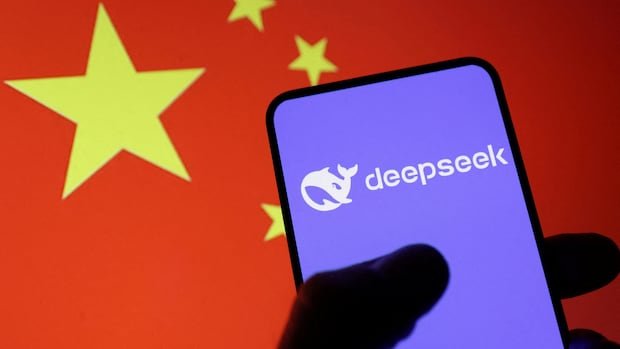
Michael Deng, a geoeconomics technology analyst at Bloomberg, noted that Kimi K2 Thinking represents a significant milestone for Chinese AI development, coming close to rivaling the performance of leading U.S. and Western models. This achievement follows the market turbulence caused by a previous Chinese AI model, Deepseek, reinforcing the growing competitiveness of Chinese AI technologies.
Kimi K2 Thinking recently excelled in Humanity’s Last Exam, a rigorous 2,500-question benchmark that evaluates an AI’s reasoning capabilities beyond basic information recall. The model ranked closely behind recent ChatGPT iterations, outperforming both Claude 4.5 and Meta’s Llama.
While acknowledging the U.S.’s current AI superiority, Dan Wang, author of “Breakneck: China’s Quest to Engineer the Future,” highlighted the narrowing gap between Chinese and American AI technologies based on performance benchmarks. The adoption of Chinese-made AI solutions by some North American companies and consumers underscores China’s technological prowess, challenging the dominance of U.S.-developed AI models.
Various experts have emphasized the practical advantages of utilizing open-source AI models from China, emphasizing their cost-effectiveness and adaptability to specific user requirements. Companies like Airbnb and Social Capital have turned to Chinese AI solutions like Alibaba’s Qwen and Kimi K2 for their efficiency and affordability, signaling a shift in the AI landscape.
As the competition intensifies, analysts predict that Chinese AI models will continue to apply pressure on U.S. counterparts, influencing market dynamics and pricing in the AI sector. The strategic significance of AI development has drawn comparisons to historical conflicts, with stakeholders emphasizing the need to imbue AI technologies with ethical values and considerations for broader societal impacts.
While the race for AI dominance unfolds, differing approaches and priorities between the U.S. and China underscore the complex nature of AI development. As both nations navigate regulatory challenges and technological advancements, the future of AI remains uncertain, with the potential for far-reaching implications on global security and economic landscapes.