
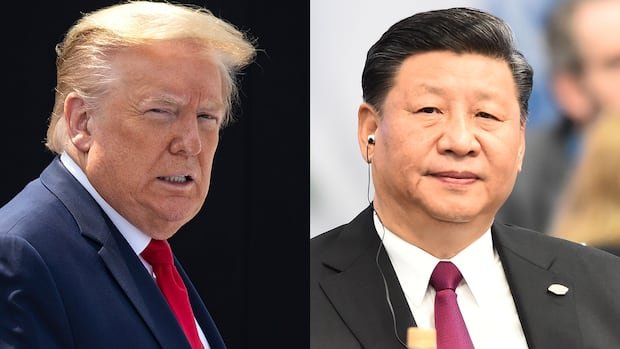

China’s dominance in the rare earth minerals market continues to give it significant influence over the United States, even though the two nations have reached a preliminary trade agreement ahead of a meeting between President Donald Trump and Chinese President Xi Jinping. The leaders are scheduled to meet on Thursday during the annual Asia-Pacific Economic Cooperation (APEC) summit in Gyeongju, South Korea.
The trade war between the world’s largest economies has escalated, with tariffs exceeding 100 percent, posing a threat to the global economy and showcasing China’s readiness to use its economic strengths as bargaining tools against increasing pressure from the White House.
Despite ongoing uncertainties, there was optimism regarding the avoidance of tariffs just days before the scheduled meeting, following the announcement of a potential trade agreement by top officials from both countries, including meetings in Geneva and Madrid. US Treasury Secretary Scott Bessent, along with US trade representative Jamieson Greer and Chinese Vice-Premier He Lifeng, revealed a substantial framework agreement for the upcoming meeting between Xi and Trump.
While details remain unclear, the agreement reportedly includes resolving issues related to TikTok’s US operations, potential resumption of soybean purchases from American farmers by China, and the postponement of export controls on rare earth minerals by China for a year, a crucial concern for the US.
Experts view the agreement as a significant step towards stabilizing the critical bilateral relationship between the two nations, acknowledging the challenges and complexities involved. The deal is seen as a strategic move to avoid further escalation in tensions, providing room for both sides to claim some level of victory while acknowledging remaining uncertainties and the need for future measures.
As Trump and Xi prepare to meet, unresolved issues such as trade imbalances, China’s overcapacity, security concerns in the South China Sea, and technological competition are expected to persist. The leaders will likely focus on smaller, more manageable agreements rather than attempting comprehensive resolutions due to deep-seated mistrust between the two countries.
Speculation surrounding the meeting intensified following Xi’s invitations to Trump earlier this year. Trump’s favorable comments about Xi’s leadership, contrasting with the hawkish stance of some within his administration, highlight the unique dynamics of the US-China relationship.
Recent developments, including China’s expansion of export rules on rare earth minerals, underscore Beijing’s strategic advantage in this sector. China’s near-monopoly on these minerals, vital for various industries, poses a challenge for the US and other countries heavily reliant on them. In response, the US is seeking to bolster its own rare earth supply chain through agreements with Japan, Pakistan, and Australia, although progress in this area is expected to be gradual.
The upcoming meeting between Trump and Xi will provide insights into their respective positions, influenced by domestic political considerations and economic challenges. As tensions persist, the global community watches closely, recognizing the significant impact that US-China conflicts could have on the world economy and security landscape.