
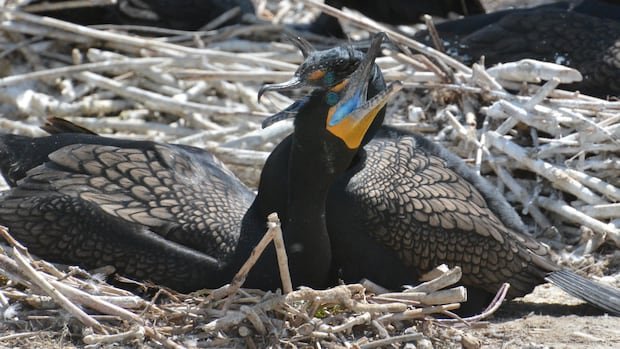


Double-crested cormorants are causing issues on the Toronto islands, with their waste causing damage to the environment. Their acidic droppings are harming trees and affecting public spaces, leading to concerns from residents and authorities.
Warren Hoselton, a former park supervisor on the islands, expressed frustration over the increasing impact of the cormorants on the ecosystem, highlighting the need for management strategies similar to those in place for other wildlife species.
The population of double-crested cormorants at Hanlan’s Point has grown significantly, causing distress among island residents who are calling for measures to relocate the birds. However, addressing this issue presents challenges due to legal protections in place.
Challenges Posed by Cormorants
The excessive excrement, known as guano, has transformed the once lush shoreline into a bleak landscape, with cormorants being perceived as disruptors of natural habitats. The situation has led to decreased recreational activities and economic impact on the local marina.
Gordon Ballantyne, the general manager at the Toronto Island Marina, described the distress caused by the cormorants, affecting both visitors and maritime activities due to the unsanitary conditions created by the birds.
The migration of cormorants from a nearby colony to the Toronto islands has raised questions about the reasons behind their relocation. Experts suggest that the move could be linked to predator pressures and availability of resources in different habitats.
Conservation Efforts and Management
While culling is a common practice in some regions to control cormorant populations, the protected status of the birds in Toronto limits such actions. The Toronto and Region Conservation Authority is actively involved in managing the cormorant population, focusing on minimizing nesting in trees to reduce environmental damage.
Efforts to encourage cormorants to relocate to designated areas and prevent tree nesting involve tactics like nest removal and habitat modification. Despite the challenges faced during breeding seasons, conservationists are working to strike a balance between preserving biodiversity and managing cormorant populations.
Considering the Role of Cormorants
Contrary to their negative portrayal, cormorants play a natural role in the ecosystem as native species. Research indicates that their impact on fish stocks is not as detrimental as perceived, highlighting the need to understand their ecological significance.
Experts emphasize the transformation of habitats rather than habitat loss due to cormorants, suggesting that these changes create opportunities for other species to thrive. Proposals for innovative solutions, such as creating artificial nesting sites, are being explored to mitigate conflicts between cormorants and human activities.
As conservation efforts continue, the focus remains on striking a balance between wildlife management and habitat conservation to ensure the long-term sustainability of ecosystems.
Tag: rewrite-pending