
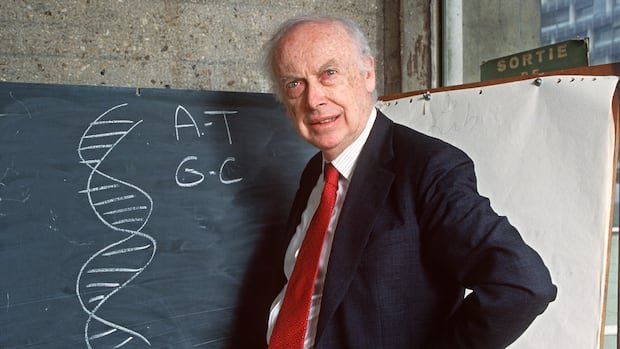

Renowned American biologist James D. Watson, known for his groundbreaking 1953 revelation of DNA’s structure, passed away at 97 years old, as confirmed by Cold Spring Harbor Laboratory in Long Island, where he had a long tenure. Watson’s legacy, instrumental in the genetic and biotechnology advancements of the late 20th century, was marred in his later years by controversial comments on race.
Watson’s fame extended beyond his scientific achievements, with his provocative persona and willingness to leverage others’ data for personal gain. His memoir, “The Double Helix,” co-authored with Francis Crick, chronicled their pioneering work on DNA’s structure, earning them a Nobel Prize in 1962. However, criticisms arose regarding their use of Rosalind Franklin’s research without due credit.
In 2007, Watson faced backlash for racially insensitive remarks, leading to his retirement from Cold Spring Harbor Laboratory. Despite subsequent apologies, he reiterated similar views in a 2019 documentary. Born in Chicago in 1928, Watson’s academic journey culminated in the elucidation of DNA’s double helix, a breakthrough that revolutionized genetics.
Following the DNA discovery, Watson’s career flourished, with notable contributions to genetic engineering and molecular biology. He played a pivotal role in the Human Genome Project, overseeing efforts to unravel human DNA’s intricate makeup. Watson’s enduring impact on scientific research and ethics remains a significant part of his legacy, culminating in the unveiling of his own genome in 2007.