
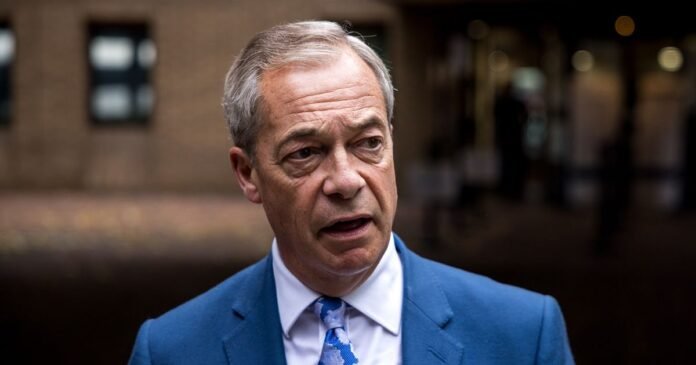

Nigel Farage faced criticism for a staged gesture during the Prime Minister’s Questions session. The leader of Reform UK opted to sit in the public gallery of the House of Commons rather than on the MPs’ benches, expressing dissatisfaction about not being selected to speak during the debate.
Accompanied by Brexit supporter Arron Banks, Farage referred to himself as a mere spectator, disregarding the random selection process used to determine which MPs get to ask questions during PMQs. Members of Parliament mocked his move, highlighting his frequent absences from parliamentary sessions, particularly for trips to the US, suggesting that representing his constituents was not his top priority.
Following a session where Keir Starmer criticized Farage for badmouthing Britain during his absence in the US, Farage defended his decision to spectate, claiming he was unfairly targeted without a chance to respond. Trade minister Sir Chris Bryant remarked on Farage’s tendency to critique from the sidelines without taking responsibility for his own policies.
Labour and other sources criticized Farage for prioritizing social media appearances over parliamentary duties, suggesting he should consider the impact of his proposals on the country. Despite his complaints about not being able to speak during PMQs, the process involves a random selection of MPs through a ballot, with the Speaker calling on them in a specified order.
Farage’s behavior drew further disapproval from MPs, with one questioning his understanding of PMQs due to his frequent absence. A Liberal Democrat spokesperson remarked on Farage’s habit of looking down on others, indicating a pattern in his behavior. Farage’s ongoing frustration with his lack of speaking opportunities during PMQs was evident, raising doubts about his commitment to his role as an elected representative.
In the PMQs format, a randomized selection process determines which MPs get to ask questions, in addition to designated questions for the Leader of the Opposition and the leader of the third-largest party. This system aims to ensure fairness and order in parliamentary debates.