
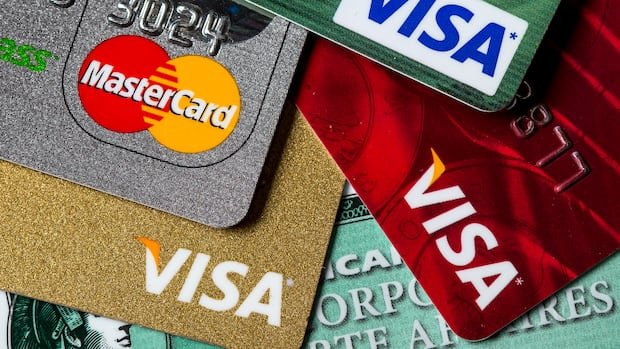

Visa and Mastercard have reached a new agreement with merchants, following a judge’s rejection of a previous $30-billion settlement for being insufficient. This revised settlement, announced on Monday, aims to resolve a 20-year legal battle where businesses accused the card networks and banks of violating U.S. antitrust laws by charging excessive fees to accept credit cards.
The proposed settlement, subject to court approval, involves Visa and Mastercard reducing swipe fees by 0.1 percentage points for five years. These fees, typically between two to 2.5 per cent, would see a slight decrease. Merchants would gain the option to select which U.S. cards to accept in specific categories, such as commercial cards, premium consumer cards (including rewards cards), and standard consumer cards. The cap for standard consumer rates would be set at 1.25 per cent until the agreement expires, and merchants would have more flexibility in imposing surcharges for credit card payments.
In the U.S., swipe fees, also known as interchange fees, totaled $111.2 billion in 2024, a significant increase from previous years. Visa emphasized that the settlement would provide “meaningful relief” to merchants of all sizes, offering them greater flexibility and control over payment acceptance. Mastercard highlighted the benefits for smaller merchants, including lower costs and simplified rules, leading to a better payment experience for businesses and consumers.
Despite agreeing to the settlement, neither Visa nor Mastercard admitted any wrongdoing. The revised agreement comes after a previous $30-billion deal was rejected by U.S. District Judge Margo Brodie in June 2024. Merchants had criticized the earlier agreement for not significantly reducing fees and for imposing restrictions such as the “Honor All Cards” rule.
Furthermore, merchants had accused Visa and Mastercard of enforcing anti-steering rules that limited their ability to direct customers to cheaper payment methods. Critics of the settlement argue that it fails to incentivize banks to lower their rates, allowing Visa and Mastercard to potentially raise fees without restrictions.
In Canada, a separate settlement was reached in 2023 to limit interchange fees to an average of 0.95 per cent, benefiting retailers with anticipated savings of about $1 billion over five years. However, concerns were raised by small business owners regarding the limitations of the deal, which only applied to businesses meeting specific criteria for processing sales through Visa or Mastercard. Additionally, a class action lawsuit settlement paved the way for Canadian businesses to pass on credit card fees to customers through surcharges, with clear disclosure requirements and reimbursements from Visa and Mastercard for years of swipe fees.