
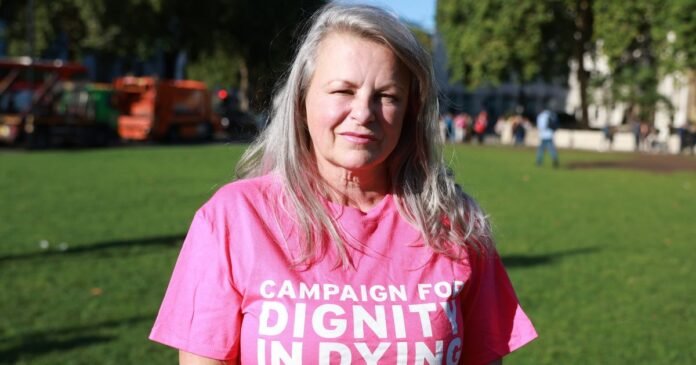

A woman, previously under police scrutiny for accompanying her late husband to Dignitas, is advocating for broader access to assisted dying. Louise Shackleton, who faced an intense 10-month investigation following her husband’s assisted death in Switzerland, is now urging lawmakers to consider that assisted dying should not be exclusive to the affluent.
She has directed her plea towards members of the House of Lords who are reviewing a proposed law that would grant individuals in England and Wales the right to choose to end their lives. Mrs. Shackleton emphasized that the option for assisted dying already exists for the wealthy who can afford overseas services, highlighting a social disparity that needs to be addressed.
Reflecting on her husband’s battle with motor neurone disease, Mrs. Shackleton shared the emotional journey of fulfilling his end-of-life wishes and the profound impact of his final message to her. She described finding a heartfelt letter from him, expressing gratitude for her sacrifices and their shared life, a gesture that brought her to tears.
Mrs. Shackleton emphasized the importance of making assisted dying accessible to all individuals, not just those with financial means. She highlighted the passing of the Terminally Ill Adults (End of Life) Bill in the House of Commons, a significant step towards legalizing assisted dying, but stressed the need for a more inclusive approach.
The proposed legislation aims to permit terminally ill adults with a prognosis of less than six months to live to apply for assisted death. This bill, now being scrutinized by a special committee, requires approval from multiple medical professionals and experts before implementation.
While the journey towards legalizing assisted dying continues, Mrs. Shackleton’s case serves as a poignant reminder of the complexities surrounding end-of-life decisions and the need for compassionate legislation that respects individual autonomy.