
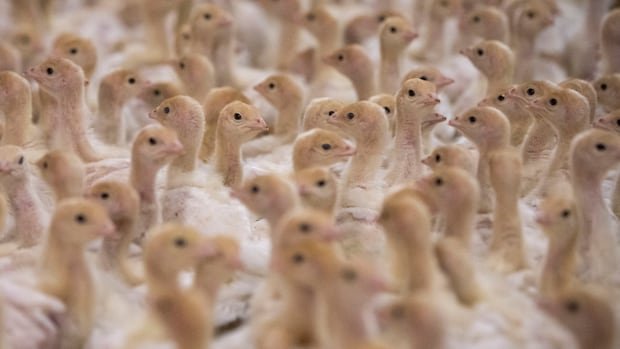

Alberta’s poultry industry is facing a challenging avian flu season, with producers like Scott Olson in Wetaskiwin dealing with their third outbreak. Olson, a turkey farmer, lost his 10,000-bird flock twice this year due to the wild geese migration passing over his farm. As he prepares for a third cull, Olson is disinfecting his barns and getting ready to restart his operation with new hatchlings after Christmas.
Currently, 11 commercial poultry farms in Alberta are under quarantine by the Canadian Food Inspection Agency, with active containment zones in various regions. The province has seen a significant increase in avian flu cases compared to previous years, with 2.5 million bird deaths attributed to the disease since 2022, making it the second-highest in Canada after British Columbia.
While some farms have managed to avoid outbreaks by implementing strict biosecurity measures, the proximity of poultry facilities to bird nesting areas along migration routes poses a significant challenge. The virus, present in bird feces, can easily spread in such environments.
Farmers are taking extra precautions to prevent the disease from spreading, such as isolating flocks, restricting access to visitors, and maintaining high biosecurity standards. The financial impact of outbreaks on farmers is substantial, resulting in lost profits, additional costs, and prolonged downtime.
To combat the spread of avian flu, farms are designated as “primary containment zones” where infected animals are culled, and strict biosecurity protocols are enforced. Once the premises are cleaned, disinfected, and certified, normal farm activities can resume. Despite the challenges, farmers remain committed to protecting their flocks and livelihoods from the devastating effects of avian flu.