
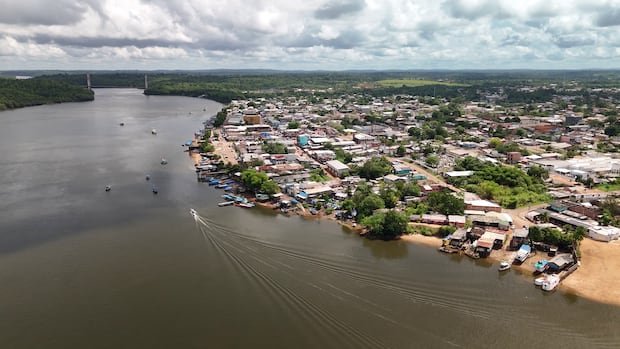

At the river port in Oiapoque, a border town close to Brazil’s northern shoreline, Cleidiney Ribeiro guides his boat into the river. Expressing hope, he mentions that progress is on the horizon for Oiapoque as he navigates towards the meeting point of the river and the Atlantic Ocean.
Brazil’s state-run oil company Petrobras has recently commenced exploratory drilling 170 kilometers off the Amazonian coast, coinciding with the inauguration of the world’s largest climate conference, COP30, in Belém, Brazil. During the event, Brazil’s President Luiz Inácio Lula da Silva emphasized the need to shift away from fossil fuel-dependent development models due to the Earth’s sustainability challenges.
Despite these statements, Brazil is on the verge of a potential oil boom in the Foz do Amazonas basin, located 500 kilometers from the Amazon River mouth. This move has drawn criticism from Suely Araújo, a public policy coordinator at Brazil’s Climate Observatory, who questions the decision to escalate oil production amid the ongoing climate crisis.
President Lula, hosting COP30, highlighted the necessity of an energy transition towards sustainable sources during the conference in Belém. As the city accommodates thousands of delegates and observers, the focus is on accelerating efforts to combat fossil fuel emissions and promote sustainable energy solutions.
In Oiapoque, anticipation for potential oil reserves is high, with aspirations for economic growth in one of Brazil’s underprivileged regions. The community is hopeful that the oil discovery could lead to development opportunities and boost property values in the area.
Petrobras holds the rights to Block 59, the sole offshore region granted an exploratory license for drilling. Following a recent auction, the government assigned 19 additional oil blocks in the Foz do Amazonas basin to companies like Exxon Mobil, Chevron, and a Chinese consortium. Despite environmental concerns, Petrobras has invested substantial efforts in exploration plans and environmental assessments to secure approvals.
The equatorial margin of Brazil is believed to harbor significant oil reserves, with estimates suggesting up to 30 billion barrels of recoverable oil in the region. The energy minister views this as a promising opportunity to create jobs and alleviate poverty in the area, although potential drilling activities near the Amazon River mouth raise environmental apprehensions.
Indigenous communities near Oiapoque have voiced opposition to the oil exploration, citing concerns about potential environmental risks and lack of consultation in the licensing process. Indigenous leaders fear the impact on waterways and land they depend on for sustenance, prompting preparations for protests at COP30 to draw international attention to their cause.
While there are conflicting views on Brazil’s oil ambitions, the nation faces the challenge of balancing energy needs with environmental conservation efforts. President Lula’s stance on the climate crisis and oil exploration underscores the complex interplay between economic development and environmental sustainability.