
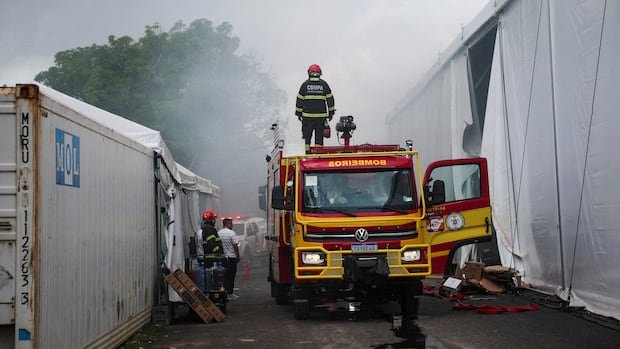

A fire incident disrupted the United Nations climate talks in Brazil on Thursday, leading to evacuations and causing delays in the negotiations, which were already progressing slowly with no significant agreements in sight. Thirteen individuals received medical treatment for smoke inhalation as a result of the fire, which occurred in an area where side events are typically held during the annual COP30 talks.
Although the fire was swiftly controlled, fire officials mandated the evacuation of the entire site for safety inspections, impacting the resumption of conference activities. If the talks do not resume until the scheduled final day on Friday, significant time could be lost. There was a possibility that only key negotiators would be allowed back for a condensed session later in the evening.
The blaze occurred at a crucial juncture as the COP30 presidency was working on a draft agreement concerning contentious issues such as financial matters, fossil fuel emission reductions, and trade regulations. The initial aim was to reach an agreement on these complex topics by Wednesday, while the Brazilian president and the UN secretary-general were present, but the agreement did not materialize.
Veteran climate observer Alden Meyer from the European think tank E3G acknowledged that the fire would interrupt negotiations for a period, adding pressure to bridge existing gaps within a limited timeframe. Climate justice lead at ActionAid, Teresa Anderson, highlighted the challenge of the situation, emphasizing the urgency to address substantial differences.
Despite the setback, Mohamed Adow, director of PowerShift Africa, noted the positive aspect of individuals assisting each other during the crisis, emphasizing the necessity of unity in responding to climate emergencies. However, Meyer expressed concerns about potential compromises driven by time constraints, cautioning against a weak agreement that may lack universal support.
UN Secretary-General António Guterres urged countries to show flexibility and compromise to achieve tangible results in the final days of the talks. He emphasized the importance of delivering outcomes while acknowledging the global attention on the ongoing negotiations in Belem. Guterres reiterated the need for rich nations to support vulnerable countries in adapting to climate-related challenges, emphasizing the urgency of tripling adaptation financing to address the impacts of climate change.
The COP30 conference, known for its extended duration, faces challenges on multiple fronts, including the phasing out of fossil fuels and enhancing transparency in climate progress reporting. Guterres advocated for a detailed transition plan away from fossil fuels, echoing calls from affected nations for immediate action to combat climate change.
The discussions at COP30 continue amidst the fire incident, underscoring the critical need for collaborative efforts to address climate challenges and secure a sustainable future.