
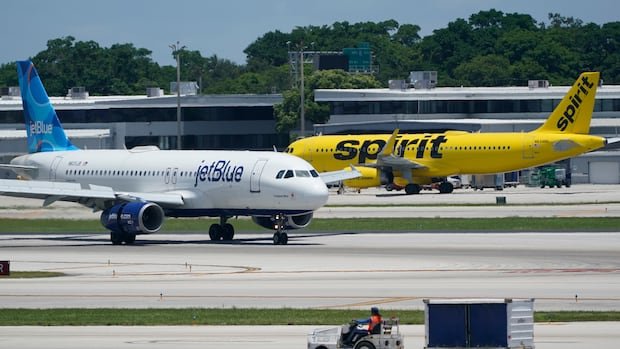

Airlines globally faced temporary disruptions leading up to the weekend as they addressed software issues on a commonly used commercial aircraft following an analysis suggesting the software code might have contributed to a sudden altitude drop on a JetBlue plane the previous month. Airbus disclosed on Friday that an investigation into the JetBlue incident indicated that intense solar radiation could corrupt crucial data for flight control systems on the A320 aircraft family. Both the U.S. Federal Aviation Administration and the European Union Aviation Safety Agency mandated airlines to rectify the problem with a new software update, which could result in short-term flight schedule disruptions, as per the EU safety agency.
The software glitch arose from a recent software update to the aircraft’s onboard computers, according to the agency. Airbus CEO Guillaume Faury issued an apology to customers for the necessary fix causing significant logistical challenges and delays. He assured in a LinkedIn post on Saturday that their teams were working tirelessly to assist operators in deploying the updates promptly to resume normal flight operations with the expected safety standards.
In Japan, All Nippon Airways canceled 65 domestic flights on Saturday, with potential further cancellations on Sunday, affecting over 30 planes. Meanwhile, in the U.S., American Airlines, with around 480 A320 family planes, reported 209 affected aircraft. The airline anticipated that most updates would be completed by Friday, with only four planes needing updates by Saturday, expecting no additional operational impact thereafter.
Air India reported that its engineers were addressing the fix and had completed updates on over 40% of the affected aircraft without any cancellations. Delta projected fewer than 50 of its A321neo planes would be impacted, while United stated that six planes in its fleet were affected, anticipating minor flight disruptions. Hawaiian Airlines confirmed it remained unaffected by the issue.
European countries saw varying impacts, with France’s Transport Minister noting stabilized situations post software updates. Germany’s Lufthansa completed most updates overnight, expecting minimal delays over the weekend. In the U.K., British Airways and EasyJet detailed minimal disruptions, with EasyJet informing passengers of any schedule changes resulting from updates.
Notably, Scandinavian airline SAS reported normal operations after working overnight to install the necessary software updates. Amid the global software fix, industry experts highlighted that addressing the issue could typically be managed between flights or during overnight checks, emphasizing that the software update process, although inconvenient during a busy holiday period, was relatively quick.
The incident involving the JetBlue flight from Cancun to Newark on October 30 resulted in injuries to 15 passengers, who were hospitalized after the plane was diverted to Tampa, Florida. Airbus, a major aircraft manufacturer, competes with Boeing and is known for its A320 aircraft, a significant rival to Boeing’s 737 series. With the A320 being one of the bestselling single-aisle aircraft families globally, Airbus updated its engines in the mid-2010s, leading to the A320neo category, as per industry experts.