
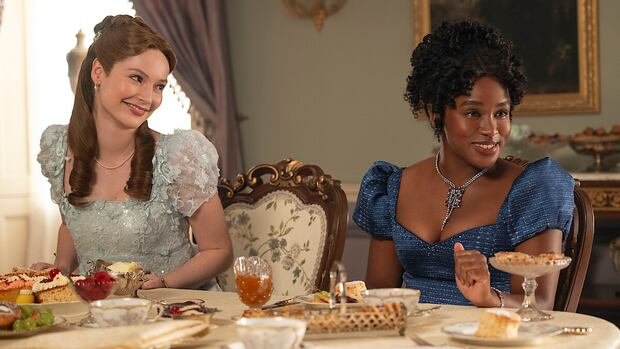

In a groundbreaking move, the upcoming season of “Bridgerton” will shine a spotlight on the lesbian romance between two key characters – the tale of “world-traveller Michaela and grieving widow Francesca,” portrayed by Masali Baduza and Hannah Dodd. Netflix recently revealed the casting choices and storyline details for the fifth season of “Bridgerton,” unveiling a teaser trailer featuring the lead characters holding hands.
Since its debut in 2020, the Regency-era drama revolving around the Bridgerton family’s eight siblings has been exploring various facets of inclusivity. A commitment to diverse casting, emphasizing inclusivity, has resulted in a notably varied cast from the outset, including a Black monarch and an East Asian family introduced in the latest season.
The upcoming Season 5 marks a significant shift towards exploring queer themes, building on the minor hints seen in previous seasons. While Michaela and Francesca have made appearances in earlier seasons, this season will prominently feature their sapphic storyline for the first time.
Showrunner Jess Brownell expressed in a Netflix press release that the essence of the show is about enabling viewers to see themselves represented and envisioning themselves in extraordinary roles, emphasizing the importance of including queer love within the show’s fantasy world.
Several critics have debated the show’s approach to representation and storytelling. While some have praised its efforts, others have raised concerns about the handling of racial dynamics and queer storylines, suggesting a need for more nuanced exploration and consistency in addressing such themes.
The decision to focus on Francesca and Michaela in Season 5 follows author Julia Quinn’s desire for a gay main character in the series, aligning with ongoing discussions around representation and diversity in the show.
As the show progresses, fan reactions have been mixed, with debates surrounding the portrayal of queer characters and the show’s direction. The upcoming season promises to center on themes of queer joy rather than trauma, aiming to infuse the narrative with love, humor, and conflict while emphasizing inclusivity and joy in storytelling.