
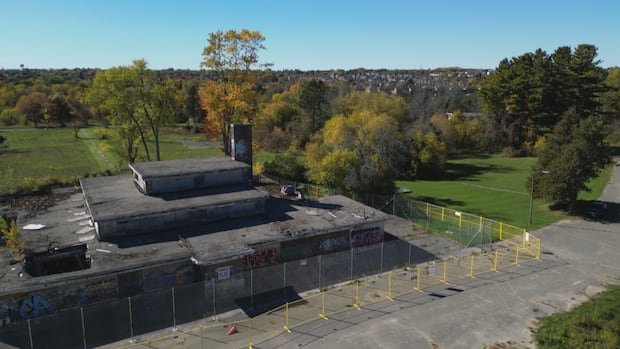

Marilyn Morawetz gazes at the deteriorating walls of a historic cafeteria building, appreciating its prairie-style architecture in an industrial setting. She expressed concern over the potential loss of the building and the entire Camp 30 site in Bowmanville, Ontario, which closed in 2008. The site, a national historic landmark, initially served as a reform school for boys in the 1920s and later housed up to 800 German prisoners of war during World War II.
The cafeteria was the backdrop for the Battle of Bowmanville, a unique three-day clash during the war where prisoners utilized hockey sticks and pipes instead of firearms. Morawetz, leading the Jury Lands Foundation overseeing the site’s preservation, faces a pivotal moment as Clarington’s council deliberates the fate of the cafeteria, the only municipally-owned structure on the property.
After Clarington acquired ownership of the cafeteria in 2022, plans for full restoration proved financially daunting, exceeding $20 million. Cheaper alternatives, including demolition, are under consideration. One proposal involves temporarily stabilizing the building to enable safe public use, potentially serving as a community hub for events and gatherings.
While some advocate for stabilization, Mayor Adrian Foster favors demolishing the cafeteria and constructing a replica to preserve its history. The Jury Lands Foundation opposes this, advocating for funding stabilization through community benefits charges and heritage grants. A new settlement offer from the landowners suggests returning all buildings and land to the municipality for park space dedication, with the developer assisting in demolition costs if Clarington opts for full restoration.
As Clarington grapples with financial constraints, the decision on the cafeteria’s future remains unresolved. The municipality faces the challenge of balancing preservation efforts with budgetary limitations, with the council set to debate the issue soon.