
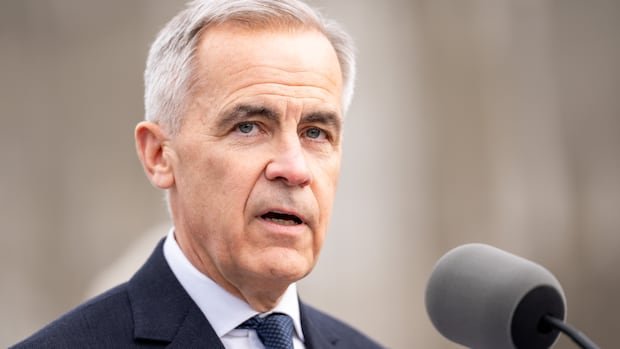

Prime Minister Mark Carney is set to finalize an investment agreement with the United Arab Emirates during his current visit, according to a government official who spoke to CBC News. The agreement, known as a foreign investment promotion and protection agreement (FIPA), aims to facilitate mutual investments between Canada and the U.A.E. by establishing regulations, including a mechanism for resolving disputes. Experts emphasize the importance of such agreements in providing a stable investment environment, particularly in times of uncertainty.
In addition to the FIPA, Canada is expected to kickstart negotiations for an expedited free trade agreement with the U.A.E., focusing on sectors like artificial intelligence, aerospace, and labor mobility. This move is seen as a step toward fostering global trade relations amid growing protectionist sentiments.
During his upcoming meeting with U.A.E. President Sheikh Mohamed bin Zayed Al Nahyan, Carney will concentrate on enhancing economic collaboration between the two countries in key areas such as energy, agriculture, infrastructure, and AI. This visit precedes Carney’s attendance at the G20 leaders’ summit in Johannesburg, South Africa.
Highlighting the significance of attracting foreign investment to Canada and diversifying trade partners, Carney’s trip aims to secure substantial investments and strengthen Canada’s position as a reliable investment destination. The government official stressed the importance of portraying Canada as a secure hub for investments and a key link between the European Union and Asia.
The visit follows U.A.E. Deputy Prime Minister Sheikh Abdullah bin Zayed Al Nahyan’s recent delegation to Canada and the opening of a Dubai Chamber of Commerce office in Toronto. In 2024, Canada-U.A.E. merchandise trade totaled $2.6 billion in exports and $800 million in imports, coinciding with the 50th anniversary of diplomatic relations between the two countries.
While concerns about human rights violations in the U.A.E. persist, government officials underscore Canada’s engagement with international partners to address such issues. The Prime Minister’s Office emphasized Canada’s ongoing humanitarian support to Sudan amid allegations of atrocities involving Emirati-backed forces.
Despite reservations about U.A.E.’s human rights record, the official highlighted the necessity of engaging with diverse trading partners in today’s global landscape. Emphasizing the evolving nature of international relations, experts suggest that Canada can assert its values while pursuing economic partnerships worldwide.
As Carney navigates diplomatic engagements with various countries, including India, China, and the U.A.E., the focus remains on pragmatic relationship-building. The expectation is for Canada to export its principles subtly while adapting to the complex dynamics of international trade. The prime minister’s ability to demonstrate tangible outcomes from these interactions with global leaders will be crucial in showcasing the effectiveness of his strategic approach.