
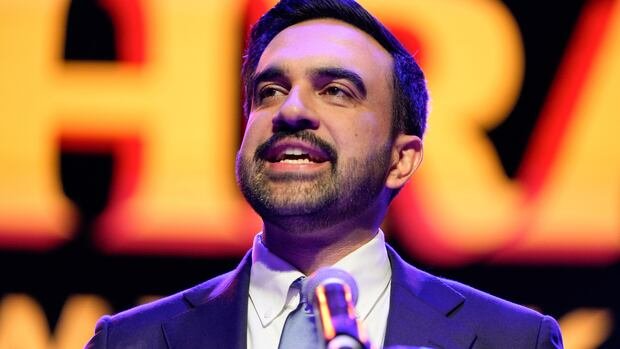

New York’s mayor-elect Zohran Mamdani struck a confrontational tone in his victory speech on Tuesday, suggesting a cooperative relationship with the U.S. president may not be on the horizon. Mamdani directed a message to Donald Trump, urging him to increase his efforts, while listing criticisms against the president. This exchange is not surprising given Trump’s previous derogatory remarks, labeling Mamdani a “100% Communist Lunatic.” The president reiterated his threat to cut federal funding to New York following Mamdani’s win.
While this may seem like a typical clash between a Democratic mayor and a Republican president, experts emphasize the significance of these interactions. Such relationships can impact the cities governed by these mayors and influence Trump’s political objectives. Aaron Saiger, a law professor at Fordham Urban Law Center, highlighted the federal government’s ability to affect city life significantly through various actions or inactions.
Cities rely on federal funding for numerous initiatives, with New York expecting a substantial portion of its budget from Washington. Notably, the Department of Housing Preservation & Development in New York, responsible for affordable housing programs, receives half of its budget from the federal government. Despite Trump’s threats, some experts question the legality of his actions against the city, noting that federal spending falls under Congress’s jurisdiction.
Withholding funding is just one tool in Trump’s arsenal to exert pressure on cities. He has deployed National Guard troops and ICE agents in response to perceived unrest and immigration issues. These tactics, particularly immigration enforcement, fall within federal powers and the president’s discretion. Trump’s strained relationships with mayors of cities like Chicago and Los Angeles have resulted in increased law enforcement presence and tensions.
Although Trump has backed down in some instances after discussions with city leaders, experts caution against mayors solely aiming to appease the president. John Mollenkopf, a political science professor, suggests that influential economic elites in Democratic cities could sway Trump’s decisions, discouraging drastic actions like cutting off funding. Ultimately, a cooperative approach may be more effective in achieving political objectives, especially for a president in his second term looking to shape the country’s direction.
Following Mamdani’s win, Trump appeared to soften his stance, indicating a willingness to assist the incoming mayor during a public appearance in Miami. This shift in tone suggests a potential thaw in tensions between the two leaders.