

In a year marked by technological advancements, the exploration of scientific frontiers both in space and on Earth has reached new heights. Here is a compilation of significant events and innovations from 2025, presented in no particular order.
The Vera C. Rubin Observatory, situated in Chile, unveiled its inaugural images this year. Despite not being the largest telescope globally, it boasts the world’s biggest digital camera with 3.2 gigapixels. This observatory has the capability to capture high-resolution images of the entire southern sky, a task it will repeat nightly for a decade. These images will be compiled into a time-lapse video showcasing celestial movements ranging from nearby asteroids and planets in our solar system to colliding galaxies, universe expansion, and enigmatic dark matter.
During September 2023, a small capsule landed on Earth carrying samples collected from the asteroid Bennu by the OSIRIS-REx spacecraft. Analysis of the dark granular material revealed the presence of essential components for life on Earth, including sugars, amino acids, nucleobases, and carboxylic acids. Although this does not confirm life on the asteroid, it does raise the possibility that the building blocks of life were prevalent in the early solar system and could have been transported to Earth from space.
Canada mourned the loss of Marc Garneau, the nation’s first astronaut, who passed away on June 4, 2025, at the age of 76. Garneau, a former naval commander, was part of the pioneering group of Canadian astronauts selected in 1983. His space career included being aboard the Space Shuttle Challenger in 1984 and holding positions at the Canadian Space Agency and in politics. His memoir, “Marc Garneau, A Most Extraordinary Ride,” offers insight into his remarkable journey.
Comet 3I/ATLAS, identified as the fastest comet ever observed, traversed our solar system at an astonishing speed of 209,000 km/hr. Initially spotted on July 1, 2025, by a Chilean telescope, its velocity indicated an origin from a different star system after traveling through interstellar space for billions of years. Composed of ice and dust, this comet provided a glimpse into the composition of another stellar system as it continues its journey through our galaxy.
Ocean acidification, a consequence of absorbing excess carbon dioxide from the atmosphere, reached a critical juncture in 2025, posing a threat to coral reefs worldwide. The escalation of acidification, coupled with record ocean temperature increases, endangers marine ecosystems like coral reefs and shell-forming marine life. This tipping point, accelerated by human-induced CO2 emissions, underscores the urgent need for action to mitigate the impact on marine environments.
Efforts in geoengineering faced scrutiny in 2025, with polar scientists cautioning against risky solutions to combat global warming, emphasizing the importance of reducing carbon emissions as a primary strategy. The impracticality and potential hazards associated with geoengineering proposals, such as injecting aerosols into the stratosphere, were highlighted in a comprehensive study.
A milestone was achieved with the FRAM2 mission, marking the first human orbital expedition over the poles. Departing from traditional equatorial orbits, the privately funded mission utilized a SpaceX Dragon capsule to orbit the Earth from a north-south direction, passing over the north and south poles during its three and a half-day journey. The four-person crew gained unique perspectives of the Arctic Ocean and Antarctic ice sheet from space.
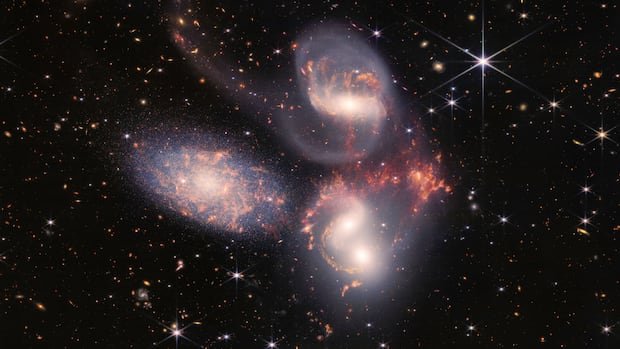
The James Webb Space Telescope continued to impress after three years in deep space, delivering significant discoveries on exoplanet atmospheres, black hole mergers, galactic phenomena, and ancient galaxies formed shortly after the big bang. As the largest space telescope launched, it remains a vital tool for researchers worldwide, providing unparalleled views of celestial phenomena.
American astronauts Suni Williams and Butch Wilmore returned to Earth in 2025 after being stranded on the International Space Station for nine months due to technical issues in a Boeing Starliner spacecraft. The safe return was made possible by a SpaceX Dragon capsule, which rescued the astronauts off the coast of Florida after the Starliner capsule malfunctioned in space.
2025 was designated by UNESCO as the International Year of Quantum Science and Technology, aiming to raise awareness of advancements in quantum computing globally. This emerging technology harnesses quantum effects to process vast data sets more efficiently than traditional silicon-based systems, offering potential applications in drug discovery, weather forecasting, and data-intensive tasks.
These events and innovations from 2025 underscore the ongoing exploration of scientific frontiers and the continuous quest for knowledge in both terrestrial and celestial realms.