
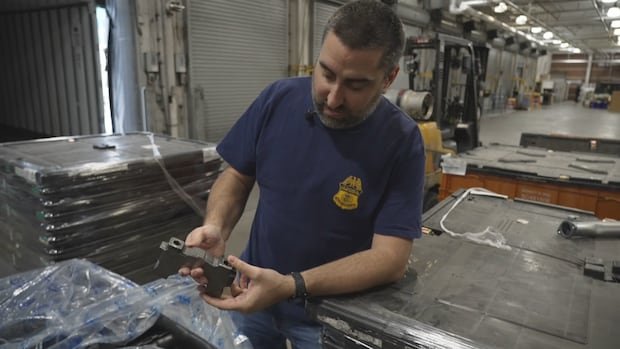

Skids holding automotive components await scrutiny by U.S. Customs and Border Protection within a warehouse near North America’s most bustling border crossing. These shipments traverse the Ambassador Bridge in Windsor, Ont., from Canada into the United States daily. Import specialist Marc Ballelli, inspecting a steel rod from a cardboard box, identifies a potential issue, noting the difference between a steel tube and an auto part. This distinction is crucial as steel incurs a 50% tariff, while Canadian-made auto parts are tariff-exempt.
Ballelli initiates an investigation process that could lead to financial penalties in addition to the applicable tariff, impacting a company’s financial health. Canadian firms affected by tariffs mention that handling paperwork on both sides of the border has shifted from a routine task to a top priority for senior staff.
Kaycee Vasudeva, owner of Ultra-Form Manufacturing, attributes a customer loss to tariff-induced economic challenges, leading to layoffs and the creation of new positions solely for paperwork management. The added administrative burden and uncertainty of product classification at the border have necessitated increased vigilance and resources to align with customs requirements.
Ballelli and his team assist companies in navigating tariff classifications, potentially saving them money by correcting errors in paperwork. Judy Staudt, assistant director at CBP’s Automotive & Aerospace Centre of Excellence and Expertise, highlights the surge in tariffs and the need for compliance amid growing trade penalties.
Trade statistics from the U.S. CBP reveal a rise in recovered funds from penalties issued, signaling heightened enforcement efforts. Canadian exporters, adapting to tariff challenges, focus on accurate valuation to reduce tariffs and ensure compliance with customs regulations.
Ray Fischer, a customs and global trade senior manager, notes increased scrutiny on customs paperwork, advising firms to prioritize accurate documentation to mitigate risks. The evolving trade landscape presents a shift from the previously low-risk nature of cross-border shipping, emphasizing the need for expert guidance in navigating complex trade agreements.
Joy Nott, a partner at KPMG specializing in trade and customs, underlines the transformed risk environment for Canadian automotive businesses, urging a proactive approach to compliance as tariff complexities persist in the foreseeable future.