
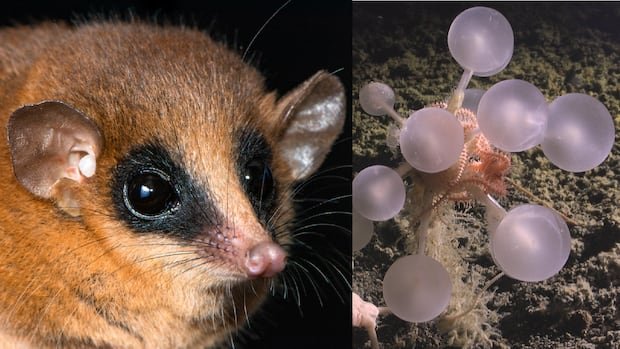

In 2025, science unveiled a fascinating array of newly discovered species, including a spider with exceptionally long genitalia, a carnivorous caterpillar that adorns itself with prey parts, and a diminutive opossum dwelling in mountainous regions.
A recent study revealed that approximately 16,000 new species are identified each year, with the rate of discovery accelerating. Over the last two decades, 15 percent of all known species have been newly documented. John Wiens, an ecology professor at the University of Arizona and co-author of the study, highlighted the importance of this rapid discovery rate in comparison to species extinctions.
While many of these species were previously known locally or captured in photographs, they had not been formally recognized by science until now. Scientists emphasize the significance of officially documenting these species to aid in conservation efforts and expand our knowledge of the diverse creatures inhabiting our planet.
Among the remarkable discoveries are four tarantula species from the Horn of Africa and the Arabian Peninsula, with males possessing the longest genitalia observed in tarantulas. The largest species, Satyrex ferox, boasts a leg-span of 14 centimeters and males with palps measuring up to five centimeters, nearly as long as their legs.
In Hawaii, researchers found a unique caterpillar dubbed the “bone collector,” which inhabits spider webs, consumes trapped prey, and adorns itself with their body parts as protection. The discovery of a carnivorous “death-ball” sponge in the Southern Ocean near Antarctica, featuring spheres covered in tiny hooks to capture prey, was also announced.
Shallower waters revealed a sea slug resembling fried eggs, named Phyllidia ovata, which steals toxins from sponges for defense. In Canada, the endangered Okanagan crayfish was identified in British Columbia’s Okanagan Lake, distinguished by the absence of a distinctive white mark found on a similar species.
Canadian researchers contributed to the discovery of six new tube-nosed bat species in the Philippines, while other species were named after famous characters like the Pinocchio chameleon from Madagascar and the Crocodile Hunter snake from India’s Great Nicobar Island. Additionally, a tiny mouse opossum, Marmosa chachapoya, was described in the Peruvian Andes.
Noteworthy amphibian discoveries in the Eastern Arc Mountains of Tanzania included live-bearing toads that forgo the tadpole stage, giving birth to live toadlets. These new species, identified through physical and genetic analysis of museum specimens, are already considered critically endangered.