
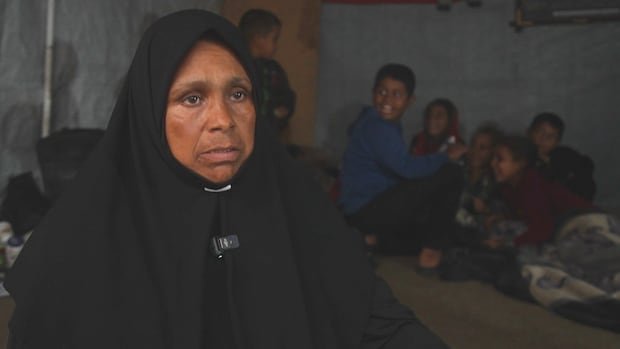

Inside her tent in Gaza City, Reda Aliwa has prepared a meal for her 36 grandchildren. The children eagerly gather around her, clamoring for their share of rice. This meal will be their only sustenance for the night, and some of them sneak extra bites when Aliwa’s attention is diverted. She instructs one of the boys to fetch water from a container outside the tent, filled with rainwater, which she then shares among the kids using a metal cup.
Aliwa reflects on the tragic loss of her five children, who perished in two separate attacks in September while seeking refuge at a camp in Gaza City. Now, she and her husband are left to care for their grandchildren as they navigate life in the aftermath of the conflict. The grandchildren are just a fraction of the approximately 40,000 children in Gaza who have lost one or both parents, as reported by the Palestinian Central Bureau of Statistics.
Despite sustaining injuries in the attacks and slipping into a coma, Aliwa’s determination to care for her grandchildren brought her back to consciousness. She left the hospital against medical advice, driven by her unwavering commitment to the children’s well-being. The family, devoid of stable income sources, relies on sporadic food distributions, with Aliwa expressing the challenges of securing enough food to sustain them.
The disruption caused by the conflict has halted the children’s education, with schools and universities being targeted and destroyed. Aliwa’s granddaughter, Ibtissam, laments the abrupt shift from a once-beautiful life to one marred by loss and uncertainty. While NGOs offer temporary learning centers with psychosocial support, the deep mental scars inflicted on Palestinian children demand comprehensive care and attention.
Living in a tent near the yellow line, the boundary delineating the ceasefire agreement between Israeli forces and Hamas, Aliwa and her family endure constant reminders of the ongoing conflict through nearby explosions. The lack of access for humanitarian organizations poses challenges in providing essential aid to families like Aliwa’s, with rubble and unexploded ordnance hindering relief efforts.
As dusk falls, Aliwa’s grandchildren huddle around a fire for warmth, engaging in simple activities to distract from their harsh reality. Aliwa, burdened with worries about the uncertain future, strives to shield her grandchildren from her own grief, finding solace in cherished memories captured in photographs. She remains steadfast in her resolve to protect and provide for her grandchildren, knowing that their resilience is tested by grief, trauma, and the harsh realities of their surroundings.