
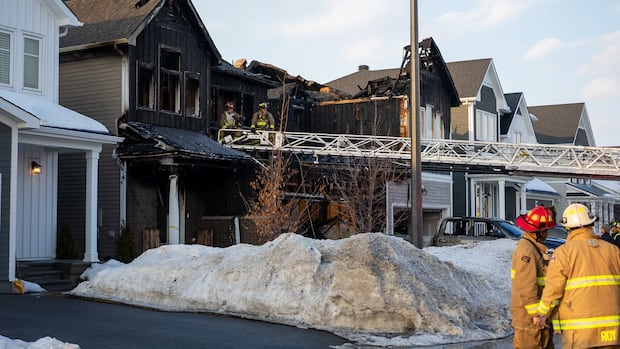

Ottawa Fire Services (OFS) is advising residents against overcharging lithium-ion batteries following a fire that ravaged two homes in Richmond.
Emergency personnel responded to several reports of a house on fire on Pelham Crescent shortly before 2 p.m. on February 17.
According to OFS spokesperson Nick DeFazio, the homeowner heard a popping noise coming from the garage before first responders arrived.
“They opened the main door of the garage and were met with smoke and flames along the wall,” he stated.
Firefighters managed to bring the fire under control by approximately 3:20 p.m., but not before it spread to an adjacent residence, displacing those occupants as well.
OFS later concluded that the fire was ignited by a lithium-ion drill battery that was charging on top of a refrigerator in the garage.
This incident marks at least the second fire linked to this type of battery in Ottawa this year. The first occurred in January when a curious dog chewed through a ski glove that was heated by the same kind of battery.
-
2-alarm fire displaces families in Richmond
-
Dog chewing heated ski glove sparks fire in Orléans home
These events prompted OFS to issue a safety alert, as the danger of battery fires continues to escalate.
Batteries ‘power everything’
Leanne Labbee, a fire prevention officer with OFS, noted that there have been over 60 incidents involving lithium-ion batteries in Ottawa since 2022.
“Lithium-ion batteries power nearly everything today,” she commented. “They are the most prevalent rechargeable batteries found in homes.”
To illustrate this, Labbee gathered various items in her house that are powered by lithium-ion batteries, filling a basket with laptops, electric toothbrushes, and even salt and pepper shakers in just 15 minutes.
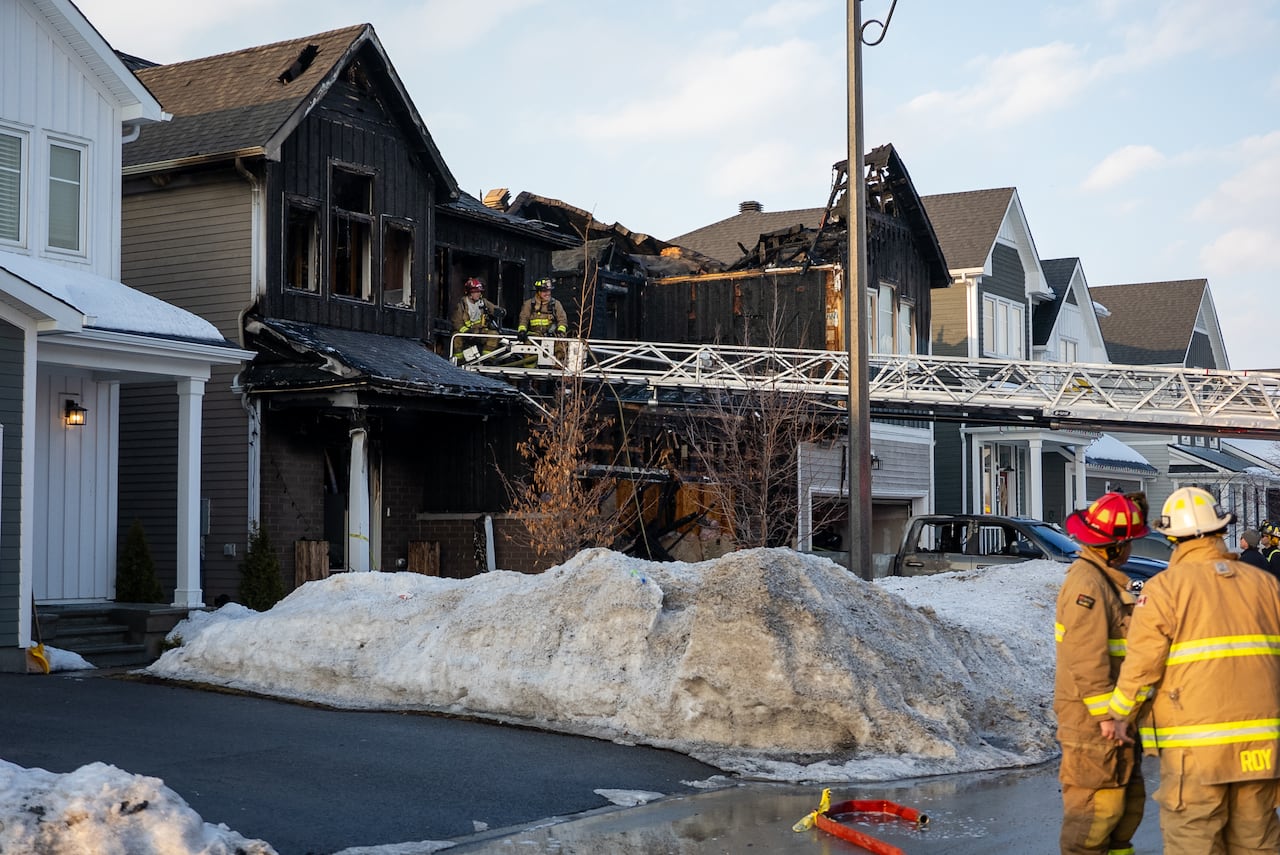
Firefighters combat a fire ignited by a lithium-ion battery that was charging in a garage in Richmond on February 17. Experts indicate that these batteries are becoming increasingly common and can pose significant hazards. (Jacob Taillefer Racine/CBC)
While these batteries are found in numerous products, their volatile nature necessitates careful handling by consumers.
OFS advises that batteries should be disconnected immediately after they reach full charge, as overcharging can lead to dangerous situations. Signs that a battery is close to catching fire include hissing sounds, swelling, or unusual odors.
Ontario’s fire marshal stated on social media on Friday that batteries should not be charged in freezing conditions, such as in a garage, as this can cause damage.
It’s like a trick birthday candle. When you blow it out, it restarts.Leanne Labbee, Ottawa Fire Services
Labbee explained that a lithium-ion battery fire generates ten times more carbon monoxide compared to fires fueled by flammable liquids like gasoline.
Due to the chemical composition of the battery, Labbee noted that these fires are also more challenging to extinguish with water.
“It simply needs to burn through all its cells to extinguish itself,” she explained. “It’s akin to a trick birthday candle. When you blow it out, it reignites.”
The rise of lithium-ion battery usage
In contrast to standard alkaline batteries, lithium-ion batteries possess a higher voltage, making them more efficient. However, the concentrated energy within these batteries also increases their risk of explosion.
Yaser Abu-Lebdeh, who heads the battery materials innovation team at the National Research Council Canada, indicated that these batteries are “prone to heating up” when mishandled or overcharged.
<p“This can lead to the cells opening and releasing toxic gases,” he remarked. “It’s difficult to manage, and the batteries can ignite and explode.”
Abu-Lebdeh explained that this “thermal runaway” results in a self-perpetuating chain reaction that rapidly increases temperature by hundreds of degrees.
While there is currently no safer variant of lithium-ion batteries available, Abu-Lebdeh mentioned that alternatives with less flammable components are in development.
“There are constant advancements occurring every week,” he noted. “We are very close to commercialization, and that’s all I can disclose.”