


A Russian court has imposed significant fines on a local news agency and its director due to a review of the popular series Heated Rivalry, which has been labeled as LGBTQ+ propaganda by Russian officials.
The fines, initially reported by the independent Russian news outlet Mediazona and later confirmed by CBC News, were handed down this week following the publication of a review on the queer hockey series by SaratovBusinessConsulting, which operates a site dedicated to entertainment and news.
A representative from the Oktyabrsky District Court in Saratov, located approximately 800 kilometers southeast of Moscow, informed CBC News that the review included a link with information on how to stream the show. The review was published in February and has since been removed.
The court representative verified to CBC that the fines were issued because the series is classified as LGBTQ+ propaganda.
The news agency responsible for the website received a fine of 500,000 rubles, translating to over $9,000 Canadian. Meanwhile, a director of the agency was fined 50,000 rubles, or roughly $900 Canadian.

Heated Rivalry has been commended for initiating vital discussions about sports and inclusivity; however, under Russian law, any content perceived to promote LGBTQ+ relationships is prohibited. (Crave)
Thousands of Russian fans
Heated Rivalry, which was produced for Bell Media’s streaming service, Crave, and is available on HBO Max in the U.S., can only be accessed in Russia via a VPN or through pirated sources.
Despite these restrictions, the series has garnered a substantial following in Russia, with tributes and fan-created content appearing on social media platforms.
As reported by Mediazona, the review highlighted the reasons behind the series’ popularity. CBC News was unable to access the review because it has been taken down from the website.
On Kinopoisk, a Russian equivalent of IMDb, over 60,000 user votes have given Heated Rivalry a score of 8.3 out of 10.
The storyline follows the passionate relationship between Russian hockey player Ilya Rozanov and Canadian hockey player Shane Hollander.
A key aspect of the plot examines Rozanov’s anxiety about potentially being unable to return to Russia if he were to publicly come out as gay.
Fans of the series in Russia previously shared with CBC News that the show resonated with them due to Rozanov’s individual challenges.
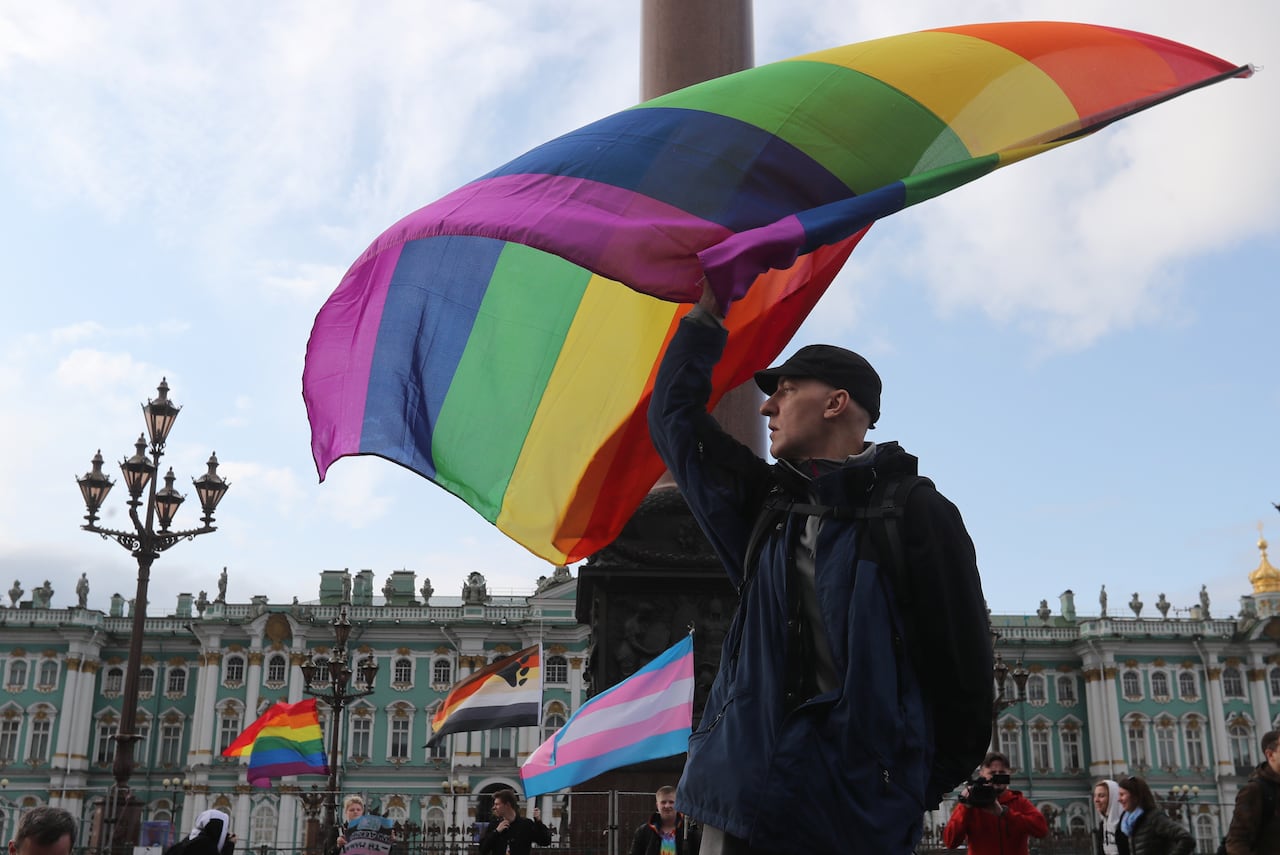
A participant waves a rainbow flag during the St. Petersburg Pride parade in 2019, three years prior to Russia implementing a comprehensive LGBTQ+ ban. (Anton Vaganov/Reuters)
Russian LGBTQ+ bans
Russia has enacted a broad ban on any content the government classifies as LGBTQ+ propaganda.
The legislation, which was expanded and signed into law by Russian President Vladimir Putin in 2022, prohibits the distribution of any information regarding LGBTQ+ individuals in the media, alongside materials that promote what is deemed “non-traditional” relationships by Russian lawmakers.
This law has resulted in the removal of books and films from shelves and streaming services. In 2024, Russian media reported on a list of prohibited books circulating among retailers, which included works by Oscar Wilde and Haruki Murakami.
That same year, Russia’s media regulator banned websites from offering unauthorized streams of Brokeback Mountain due to its LGBTQ+ content.
Furthermore, Russia has labeled the LGBTQ+ movement as an “extremist organization” and has prosecuted individuals for sharing images of the Pride flag.