
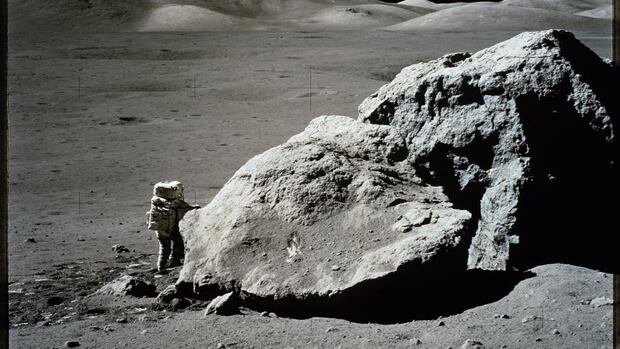

On July 20, 1969, the global audience anxiously observed as two American astronauts – Neil Armstrong and Buzz Aldrin – smoothly traversed the moon’s surface while command module pilot Michael Collins monitored from above. This event was anticipated to herald a new era: the age of space exploration, with humans venturing beyond Earth’s confines.
Despite six subsequent missions, including the infamous Apollo 13 incident that thwarted a lunar landing, humanity’s lunar aspirations waned after Apollo 17 in December 1972. Various factors, such as the costly Vietnam War, achieving the goal of surpassing the Soviet Union in reaching the moon, and declining public interest, contributed to the cessation of moon missions for over five decades.
However, NASA’s ambitious Artemis program aims to reignite lunar exploration by returning humans to the moon’s surface in the coming years. The primary motivations for revisiting the moon include scientific research and engineering advancements, emphasizing the development of new technologies and techniques essential for human spaceflight progress.
The upcoming Artemis II mission, set to launch in early February, will not land on the moon but will orbit around it. This mission, lasting 10 days, will enable astronauts to venture farther than any human has before, conducting hardware tests and experiments crucial for the subsequent Artemis III crew.
Scheduled for 2028, Artemis III will mark astronauts’ return to the lunar surface, specifically targeting the unexplored south pole. Concurrently, other nations like China and India are also pursuing lunar exploration goals, with plans to land humans on the moon by 2030 and 2040, respectively.
Beyond symbolic achievements, the moon represents a valuable asset for long-term human presence and commercial exploitation. Private companies are actively investing in lunar endeavors, viewing them as profitable ventures. This shift towards a new space economy involves leveraging lunar resources, with potential applications ranging from energy solutions to technological innovations benefiting various industries.
Moreover, lunar exploration contributes to scientific advancements with practical implications for terrestrial use, including medical research and technological breakthroughs. Space missions have historically led to groundbreaking innovations such as computer technology and spin-off technologies like food safety measures, cordless tools, and water purification systems.
As governments collaborate with private entities to explore lunar opportunities, the space industry emerges as a significant economic sector generating employment and fostering technological growth. This renewed focus on lunar exploration underscores the potential for transformative changes in various fields, reflecting a pivotal era in space exploration and utilization.
While uncertainties persist about the long-term sustainability of lunar missions, the optimistic outlook prevails among experts like Ram Jakhu, who foresee space exploration and lunar activities catalyzing monumental transformations for humanity through technological advancements and enhanced utilization of space resources.