
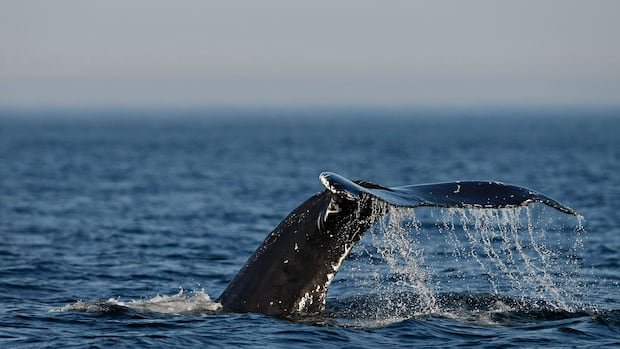

In the Gulf of St. Lawrence, recent Canadian research indicates that the diets of certain baleen whales are changing as the water temperatures rise. Lead researcher Charlotte Tessier-Larivière from Université du Québec à Rimouski mentioned a shift in the diets of fin and minke whales towards forage fish like capelin, mackerel, and herring, which were traditionally the primary diet of humpback whales in the region.
The study revealed that whale species have the ability to adapt their diets based on the availability of preferred prey. While this adaptation shows promise, the full extent of their adaptive capacity remains unknown. Concerns arise regarding the sustainability of these dietary changes if the prey species decline in numbers.
Hanna Vatcher, a campaigner at Oceana, expressed a mix of encouragement and concern about the study’s findings, emphasizing the impact of climate change on ocean ecosystems and the need for adaptive management strategies. The research involved analyzing tissue samples from whales and their prey over 28 years to track changes in carbon and nitrogen isotopes, reflecting shifts in diet composition.
The study observed an increase in forage fish signatures in the tissues of fin, minke, and humpback whales over the years. These forage fish are considered crucial in the marine food web, supporting various ecosystems. Despite similarities in their diets, the whales exhibited signs of resource partitioning, indicating a balanced coexistence by targeting different fish species to avoid competition.
Janie Wray, CEO of BC Whales and North Coast Cetacean Society, highlighted the intelligence of whales in adapting to changing prey availability. Collaborative feeding behaviors, such as bubble net feeding by humpback whales, were noted, showing sophisticated hunting techniques. The study also suggested that whales exhibit flexibility in their foraging behaviors, adjusting to variations in prey availability.
Wray emphasized the importance of studying whale behaviors to identify key marine habitats for protection. By understanding whale preferences and adaptations, conservation efforts can focus on safeguarding essential areas for these marine mammals. Plans to expand marine protected areas in the St. Lawrence region are in progress to support the evolving needs of whale populations in response to changing environmental conditions.