
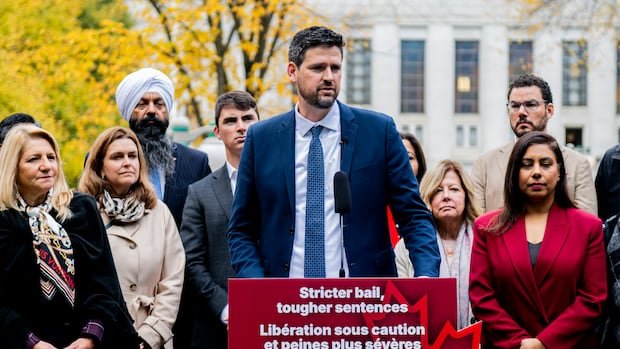

The federal Liberal government unveiled modifications to the justice system on Thursday with the aim of prolonging the incarceration of certain offenders as part of efforts to reduce crime rates. The newly introduced legislation, C-14, encompasses numerous targeted adjustments to the bail and sentencing structure within the federal Criminal Code, a long-standing request from victims’ rights advocates, police unions, and several provincial premiers. These changes, announced by Justice Minister Sean Fraser, focus on making bail more challenging to obtain, particularly for repeat and violent offenders. They incorporate the establishment of new “reverse onuses,” where detention is the default choice, and individuals seeking bail must prove why they should not remain in custody until their trial.
The government is instructing courts to meticulously review the bail proposals of individuals accused in these reverse onus cases to ensure the credibility and reliability of their requests to be released. Fraser emphasized that the purpose of the bill is to enhance public trust in the justice system and prevent dangerous individuals from roaming free. The legislation also refines the “principle of restraint,” intending to maintain a balance between releasing accused individuals on bail promptly and imposing minimal conditions. The bill directs courts to consider specific factors, such as the nature of allegations involving random or unprovoked violence, to determine the necessity of detention for the protection of victims or witnesses.
In terms of sentencing, the government advocates for stricter measures against repeat and violent offenders to increase their prison time. The bill introduces consecutive sentences, requiring individuals to serve one sentence after another instead of concurrently for multiple offenses. It also introduces new aggravating factors for crimes against first responders, retail theft, and damage to essential infrastructure to ensure harsher sentences. Additionally, the legislation eliminates house arrest for certain sexual assault and child sexual offenses.
Furthermore, the proposed changes in C-14 include provisions for handling accused individuals under 18 by broadening the scope of crimes that can lead to their detention. These modifications align with a comprehensive strategy to combat crime, combining robust laws to deter criminal conduct with investments in hiring additional law enforcement personnel and funding for essential social services like housing and mental health care. The government aims to prevent tragedies in communities by providing support to at-risk youth and addressing the root causes of criminal behavior. Discussions are ongoing regarding financial assistance to provinces for implementing these changes, considering potential cost implications for provincial correctional facilities due to increased incarcerations.