
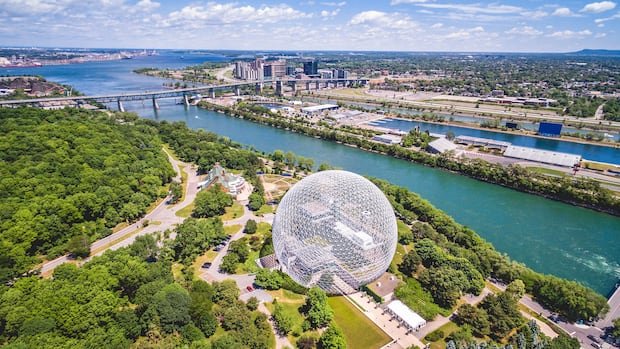

Almost six decades ago, Montreal was the center of attention worldwide during the 1967 International and Universal Exposition, known as Expo 67. This event marked the peak of Canada’s centennial celebrations and gave rise to major infrastructure projects in the city. Expo 67, which attracted 62 nations and showcased close to 100 thematic pavilions, drew over 50 million visitors during its six-month duration. This world’s fair elevated Montreal onto the global platform and reshaped the city’s landscape significantly.
The Montreal Star hailed Expo 67 as “the most staggering Canadian achievement since this vast land was finally linked by a transcontinental railway.” Over time, with the disappearance of more relics, the question arises – what remains to preserve Expo 67 in our collective memory?
Historian Roger La Roche highlighted the enduring elements of Expo 67, emphasizing the man-made islands where the fair was held. Île Ste-Hélène underwent significant expansion to encompass neighboring Île Ronde, whereas Île Notre-Dame was constructed from scratch in just 10 months using materials from various sources, including sediments dredged from the river and landfill from the excavation of Montreal’s new Metro system.
Among the notable Expo 67 structures are Moshe Safdie’s innovative Habitat 67 housing complex and Buckminster Fuller’s geodesic dome, now home to the Biosphere Environment Museum. Many pavilions and exhibits at the fair were designed to be temporary, with some dismantled immediately after the event, while others found new purposes within Canada or were relocated.
The Canada pavilion now serves as a multi-purpose venue, the Place Des Nations amphitheater hosted events until the early 1980s, and efforts to revive it as a concert space are facing financial challenges. A self-guided walking tour via the WasteScapes app sheds light on Expo 67’s architectural remnants, including lesser-known sites like the Korean and Tunisian pavilions.
While some Expo 67 landmarks endure, concerns arise about the diminishing original rides at La Ronde amusement park. Recent announcements of dismantling iconic attractions like La Spirale have sparked debates on preserving these historical symbols. Historian La Roche advocates for repurposing landmarks rather than tearing them down, emphasizing the importance of understanding and conserving architectural heritage.
As Expo 67’s legacy faces transformations, maintaining a balance between preservation and modernization remains a pressing issue. The future of iconic structures and rides from this historic event hangs in the balance as Montreal navigates the challenges of preserving its cultural past amidst evolving landscapes and financial constraints.