
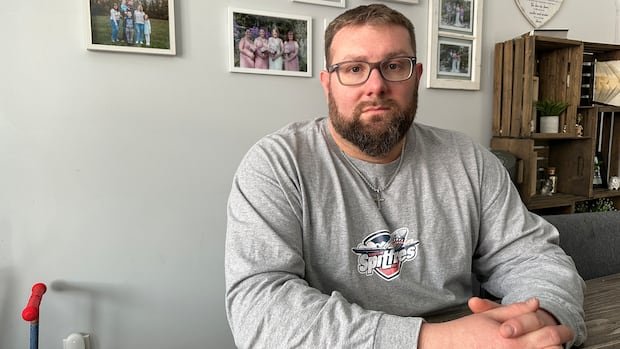

A resident of Windsor is facing significant stress as the city demands him to reverse the alterations he made to his backyard, which he fears could lead to financial ruin with an approaching deadline.
Robert Redmond, residing in Fontainebleau, purchased his home in 2019 with a berm and a cement wall in the backyard for sound mitigation from nearby train tracks. Observing that his neighbors had made changes to similar structures years ago, Redmond decided to follow suit during the pandemic years. He dismantled the shaky cement wall and removed the berm, which required the removal of approximately 52 dump truck loads of dirt, costing him $6,700.
Following these modifications, a neighbor reported the changes to the city, prompting officials to instruct Redmond to reinstall the berm. The city set a deadline for him to engage a sound engineering specialist to redesign the structure. Despite extensive efforts to find an engineer in Ontario, Redmond struggled until he managed to reach an engineer from the original firm that designed the berm three decades ago. The engineer proposed a wooden fence solution that would meet the sound requirements of the original berm.
Despite presenting a viable alternative, the city dismissed Redmond’s solution, citing safety concerns in case of a train derailment. Redmond argued that the likelihood of a derailment causing harm in the area was minimal due to the slow-moving trains in the trainyard. The City of Windsor, however, emphasized the necessity of maintaining sound barriers and berms for residential developments near active train tracks to comply with property standards bylaws and rail safety requirements.
Colin Novak, a University of Windsor engineering professor involved in the original acoustic impact assessment, explained the importance of berms in reducing noise levels and ensuring safety along railway lines. He noted that while other options like noise barrier fences or concrete walls could attenuate noise, they lacked the safety buffer provided by a berm in case of a derailment.
Redmond expressed frustration over the situation, indicating that restoring the berm by the given deadline would pose a significant financial burden. He highlighted the unfairness of being singled out for non-compliance while others in the area were not penalized. The looming deadline and potential costs of berm reinstallation have left Redmond feeling overwhelmed, with uncertainties about the future and financial implications for his family.