
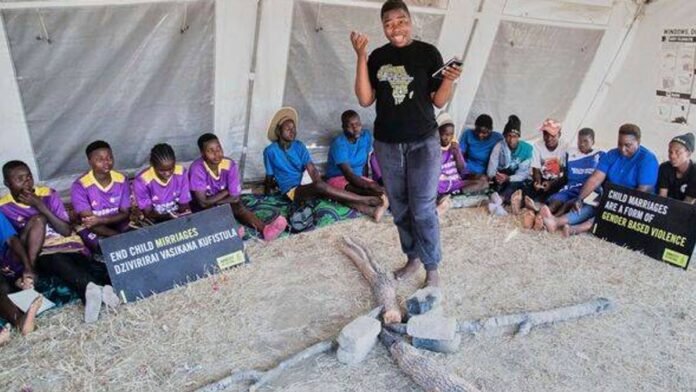

Young girls in Zimbabwe are challenging a harmful tradition known as “Nhanga,” which historically indoctrinated them to serve their adult husbands. This tradition, which involved teaching girls how to please their husbands sexually and perform household duties, is now being redefined in Shamva.
Anita Razo, an 18-year-old who joined the group at 14 and now mentors younger girls, described the transformed Nhanga as a safe and empowering space. Within this setting, girls openly discuss topics such as sexuality, child marriage, pregnancy, gender equality, education, and the law.
The primary objective is to empower girls against child marriage, a prevalent issue in Zimbabwe where a significant number of girls marry before the age of 18. Despite laws banning child marriage in Zimbabwe and other African countries, deep-rooted cultural norms and poverty continue to hinder efforts to eradicate this practice.
Through initiatives like the Rozaria Memorial Trust, survivors like Samantha Chidodo have been able to overcome early forced marriages and pursue education and personal growth. The modern Nhanga movement has gained momentum, with over 200 girls participating in Shamva and many schools adopting this progressive model.
Local leaders, like Xmas Savanhu, are taking proactive measures to prevent early marriages by imposing penalties on offenders and ensuring that girls can continue their education without financial barriers. However, challenges persist due to ingrained cultural beliefs that stigmatize pregnant girls or child brides.
Nyaradzai Gumbonzvanda, a U.N. Women executive, emphasizes the need to shift social norms and empower girls to combat child marriage effectively. She advocates for a holistic approach that involves educating and supporting young girls to drive positive behavioral change within their communities.
Razo echoes the importance of peer influence in promoting positive actions among girls, emphasizing the collective effort needed to address harmful practices like child marriage. The ongoing battle against child marriage requires a multifaceted approach that involves legal enforcement, community engagement, and empowering young girls to advocate for their rights and futures.