
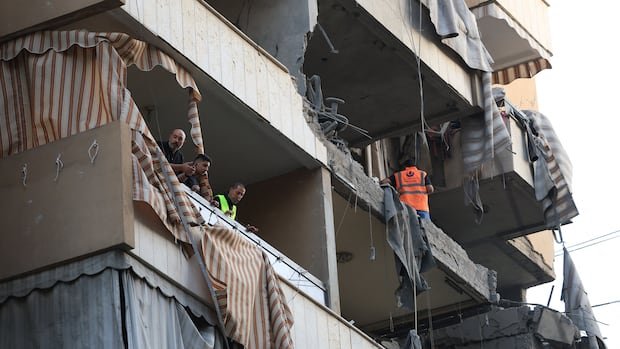

Israel carried out an attack on Lebanon’s capital on Sunday, marking the first strike since June. The target was Hezbollah’s chief of staff, Haytham Tabtabai, with Israel claiming responsibility for his death. The strike in Beirut’s southern suburbs resulted in the killing of five individuals and injuring 25 others, according to Lebanon’s Health Ministry.
Hezbollah confirmed the death of Tabtabai, acknowledging the impact of the strike launched almost a year after a ceasefire in the conflict between Israel and Hezbollah. The incident raised concerns of potential escalation, coinciding with an upcoming visit by Pope Leo XIV to Lebanon.
Israeli Defence Minister Israel Katz emphasized the country’s commitment to safeguarding its residents, vowing to take strong action against any threats. The Israeli military advised residents near the Lebanese border to maintain their daily routines, indicating a perceived low risk of military retaliation from Hezbollah.
Israeli Prime Minister Benjamin Netanyahu accused Tabtabai of spearheading Hezbollah’s efforts to rearm, supporting recent intensified Israeli airstrikes over southern Lebanon. Israel and the United States have been pressuring Lebanon to disarm Hezbollah, citing concerns about the group rebuilding its military capabilities.
Hezbollah has refrained from attacking Israel since the ceasefire commenced, with the latest strike targeting Tabtabai, who was a key figure in the organization. Tabtabai, designated as a terrorist by the U.S. in 2016, led Hezbollah’s elite Radwan Unit and had a significant role in the group’s operations in Syria and Yemen.
Mahmoud Qamati, deputy chair of Hezbollah’s political council, expressed intentions of considering an appropriate response to the strike, hinting at a potential escalation of tensions across Lebanon. Lebanon’s President Joseph Aoun condemned the attack, urging the international community to intervene and halt further assaults on the country and its people.
Despite Israel’s reaffirmation of commitment to previous agreements with Lebanon, the strike resulted in damage to civilian areas in Beirut. The incident sparked criticism from Lebanese officials, with ongoing discussions about disarming non-state actors in the country, including Hezbollah, to prevent further conflicts.
The recent strike on Lebanon underscores the fragile dynamics between Israel and Hezbollah, highlighting the unresolved tensions and challenges in the region.