

The Trans Mountain oil pipeline system is anticipated to function at its maximum capacity in April and May, primarily due to energy disruptions stemming from the ongoing conflict in the Middle East.
This network of pipelines conveys oil from Edmonton to a terminal located in Burnaby, British Columbia.
Generally, a significant portion of the exported oil is intended for China and various Asian nations, which are increasingly seeking energy as global supplies are restricted by the ongoing tensions.
Achieving full capacity would mark a significant achievement for Trans Mountain, which had initially projected this milestone to be several years away. A year ago, the pipeline was operating at 80 to 90 percent capacity.
“The system is essentially at full capacity,” stated Mark Maki, the CEO of Trans Mountain.
Energy prices have surged over the past month as Iran has limited access to the Strait of Hormuz, a crucial passage through which 20 percent of the world’s oil, along with natural gas and other commodities, is transported.
“The market requires time to adjust to the conflict,” Maki remarked during an interview with CBC News at the CERAWeek energy conference in Houston. “What we are beginning to observe is a transition towards North America as a supply source.”
Asian clients are “extremely interested in Canadian oil, no question about it. They appreciate the nation and the quality of the product they receive,” he added.
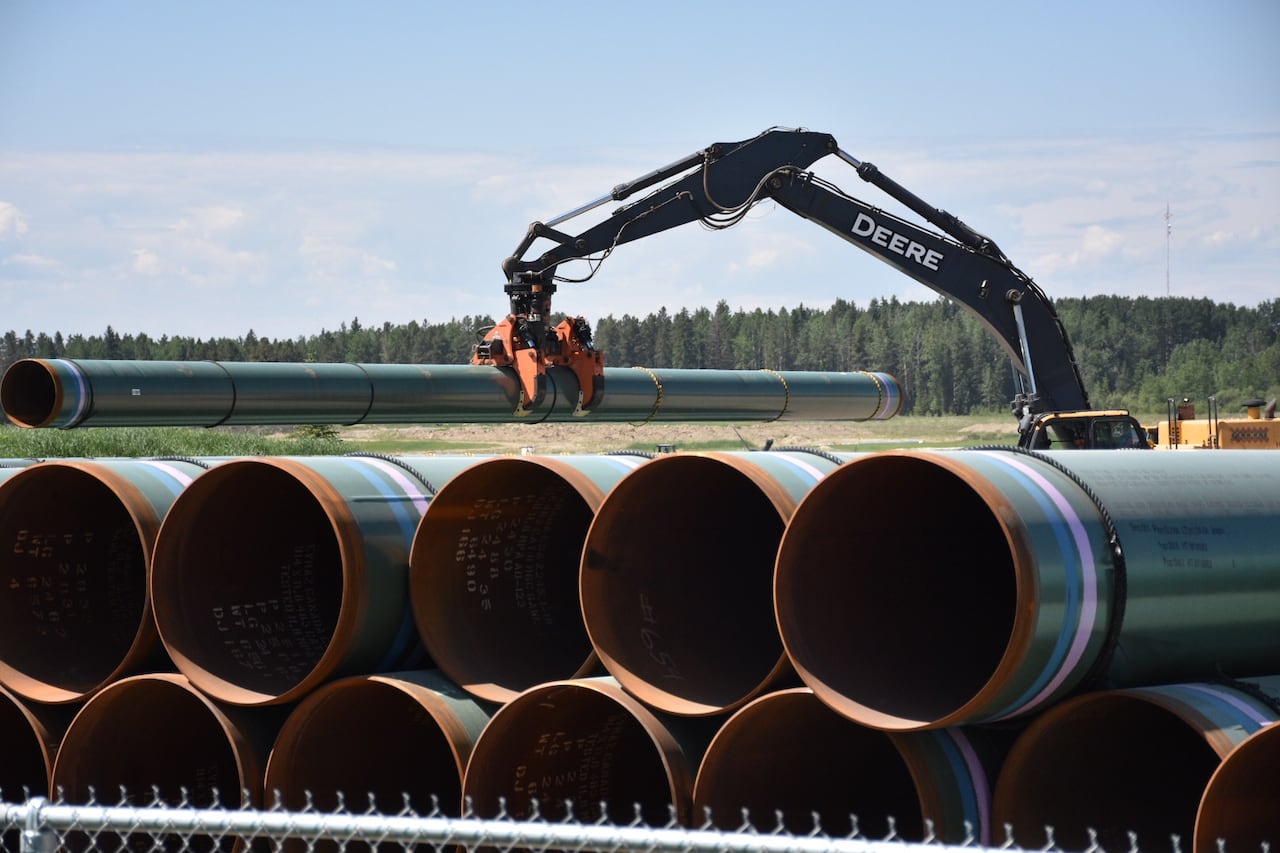
The original Trans Mountain pipeline system was built in the 1950s, while the $34-billion expansion project began transporting oil from Edmonton to Metro Vancouver in May 2024. (Terry Reith/CBC)
If the conflict in the Middle East were to conclude, experts believe it may take several months for energy markets to stabilize. Asian nations have been particularly impacted by the energy crisis, with some already facing shortages of oil and natural gas.
On Tuesday, Shell CEO Wael Sawan cautioned that Europe could soon experience similar disruptions to fuel supplies that Asia has been dealing with.
Further expansion projects
In the meantime, Trans Mountain is progressing with two expansion initiatives aimed at increasing oil transportation through the current pipeline system.
The first enhancement involves the use of drag-reducing agents, which would enable the movement of up to 10 percent more oil. This project is expected to cost $9 million, with construction slated to commence in August and wrap up by January 2027.
The second expansion is more intricate and will require the establishment of additional pumping stations. Although the original completion date was set for 2029, Maki noted that the Crown corporation is already procuring equipment with the goal of finishing the expansion by 2028.
This expansion is projected to boost capacity by an additional 360,000 barrels per day, pending necessary regulatory approval.
The twin pipeline system currently has the capability to transport approximately 890,000 barrels per day from Alberta to the West Coast.