
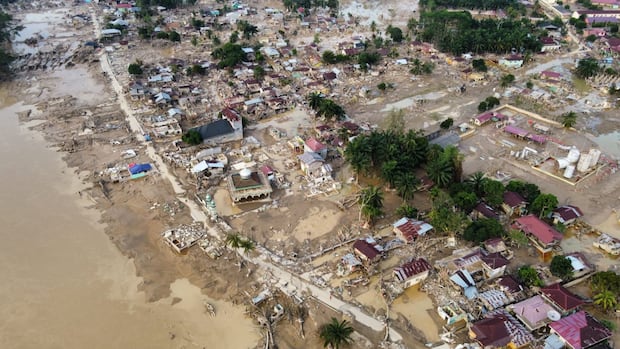

The death toll from the devastating floods and landslides that struck parts of Asia last week exceeded 1,500 on Thursday. Rescue teams are urgently working to locate survivors, with hundreds still missing throughout the affected region.
Recent reports indicate that meteorologists have predicted new rainfall in several areas of Indonesia, including North Sumatra, West Sumatra, and Aceh, raising concerns about additional destruction in regions already facing severe flooding.
The situation has been further exacerbated by warnings that years of deforestation due to rampant development, mining activities, and palm oil plantations may have intensified the disaster’s impact. There is a growing call for government intervention.
“We need the authorities to examine and improve forest management,” stated Rangga Adiputra, a 31-year-old educator whose home was destroyed in West Sumatra. The hills surrounding his village, located near Padang, have been ravaged by illegal logging.
“We don’t want to see such an expensive disaster happen again,” he added.
Officials confirmed that the death count includes 836 fatalities in Indonesia, 479 in Sri Lanka, 185 in Thailand, and three in Malaysia.
Numerous villages in Indonesia and Sri Lanka remain buried under mud and debris, with 859 individuals still unaccounted for in both nations.
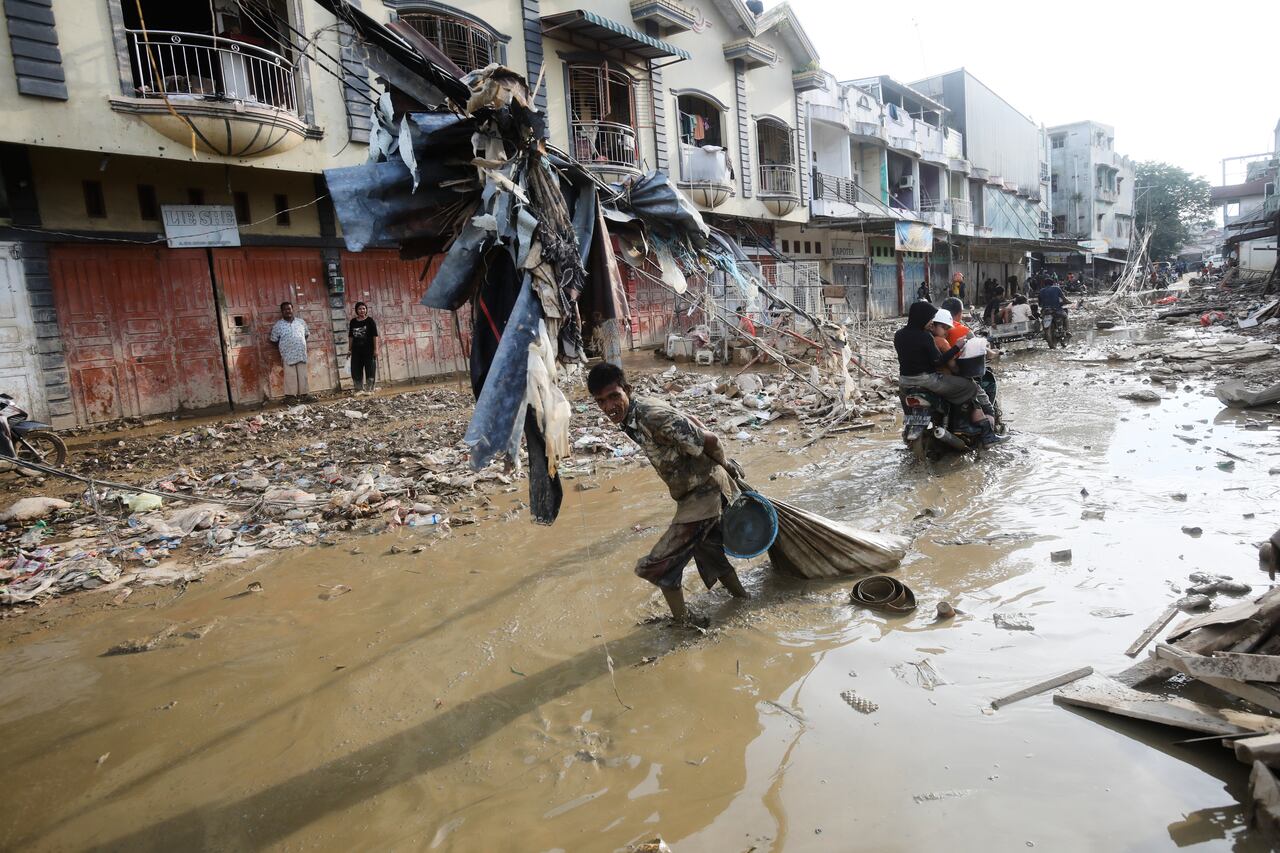
A survivor drags a sack of salvaged items through the mud at an area affected by flash flood in Aceh Tamiang. (Binsar Bakkara/The Associated Press)
Reports indicate that thousands are experiencing severe shortages of food and clean water in isolated areas. The floods and landslides have destroyed roads and bridges and disrupted telecommunications, rendering many communities unreachable.
Indonesian television broadcast images showing large amounts of logged timber being carried downstream in North Sumatra, West Sumatra, and Aceh.
The leading Indonesian environmental organization, WALHI, reported that decades of deforestation, fueled by mining, palm oil cultivation, and illegal logging, have stripped away the natural barriers that previously absorbed rainfall and stabilized the soil.
“This disaster was not solely a result of natural forces; it was worsened by years of deforestation,” remarked Rianda Purba, an activist with WALHI. “Deforestation and rampant development have diminished Sumatra’s resilience.”
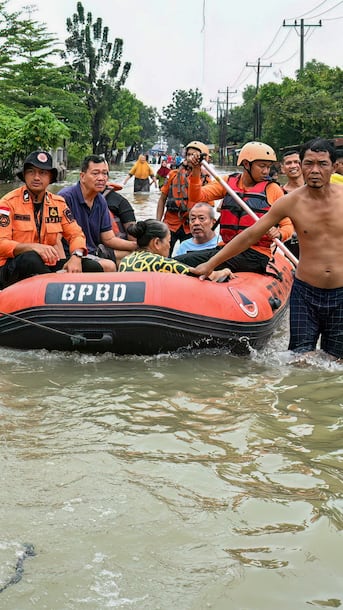
Rescue crews scramble to reach survivors and recover more bodies as the death toll from last week’s disastrous flooding and landslides tipped over 1,300 across Indonesia, Sri Lanka and Thailand. Almost 900 people are still missing.
WALHI noted that over 240,000 hectares of primary forest were lost in 2024 alone, leaving the small river basins in Sumatra increasingly vulnerable.
Another environmental organization, Global Forest Watch, stated that the three affected provinces have lost 19,600 square kilometers of forest since 2000, an area exceeding the size of New Jersey.
“If restoration efforts do not commence immediately, more lives will be at risk,” Purba cautioned.
Indonesian President Prabowo Subianto promised reforms in policy after touring the flood-affected regions on Monday.
<p"We must genuinely work to prevent deforestation and forest degradation. Protecting our forests is essential," Prabowo emphasized.
In Batang Toru, North Sumatra, where seven companies operate, hundreds of hectares have been cleared for gold mining and energy projects, leaving slopes exposed and riverbeds clogged with sediment. The rivers in this area are swollen with runoff and timber, while entire villages have been buried or washed away.
Lawmakers have demanded that the companies’ permits be revoked.
-
Indonesian man searches for missing wife after devastating floods
-
Residents hunt for food and water after deadly floods
In response to public outcry, Environment Minister Hanif Faisol Nurofiq announced an investigation into eight companies believed to have contributed to the disaster. He stated that environmental permits will be scrutinized, and future assessments will need to consider extreme rainfall scenarios.
“Someone must be held accountable,” he declared.
Recent weather predictions forecast heavy rain and thunderstorms for Friday and Saturday, with saturated soil and swollen rivers leaving communities anxious.
For 67-year-old survivor Safnida, the forecast brings back fears.
“We can’t always expect life to be good, can we? I’m thankful to be alive, even though my house was destroyed in the floods,” she expressed, sitting on a thin mat in an elementary school that has been converted into an evacuation shelter in Padang city on Thursday.
“At my age, I’m uncertain if I can endure this,” said Safnida, who, like many Indonesians, is identified by a single name.
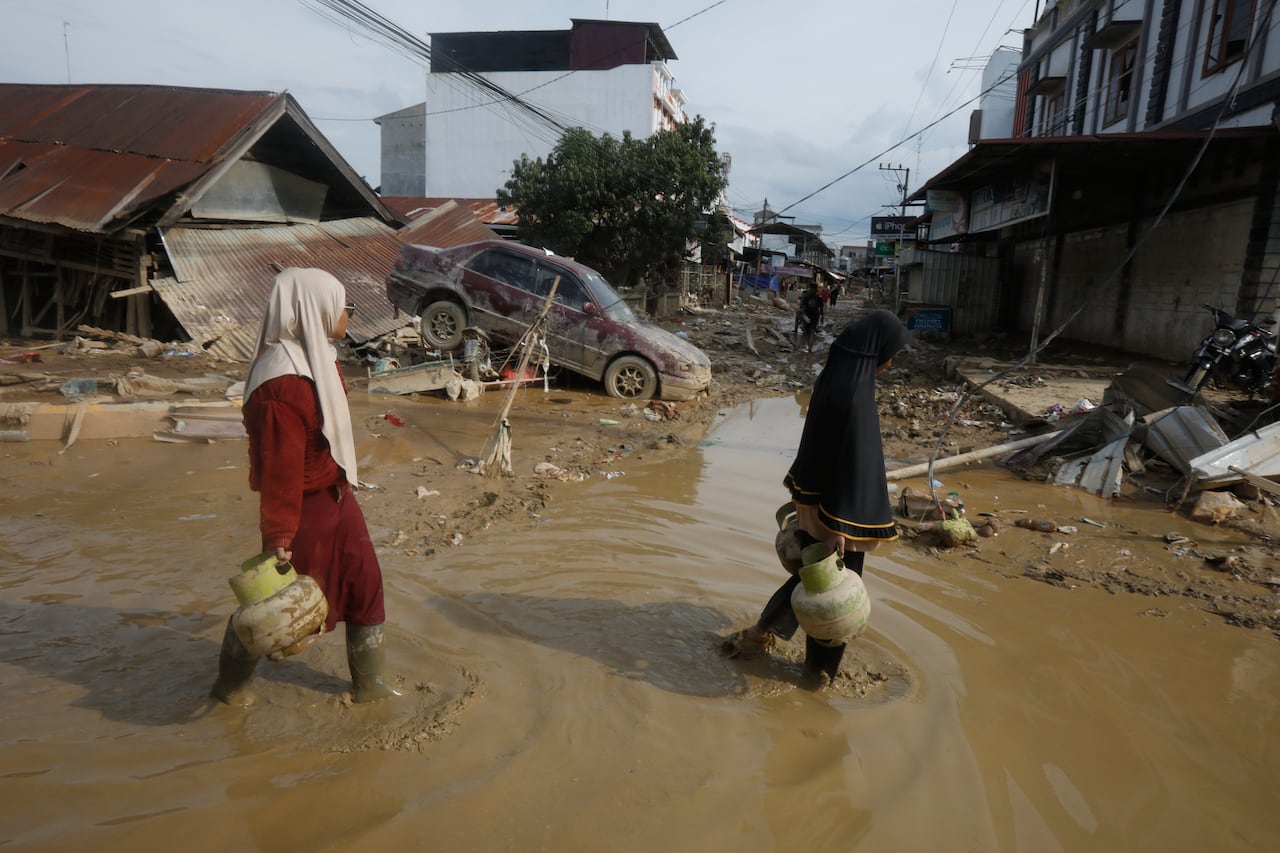
Survivors walk past the wreckage of a car at an area affected by flash flood in Aceh Tamiang, on Sumatra Island, on Thursday. (Binsar Bakkara/The Associated Press)