

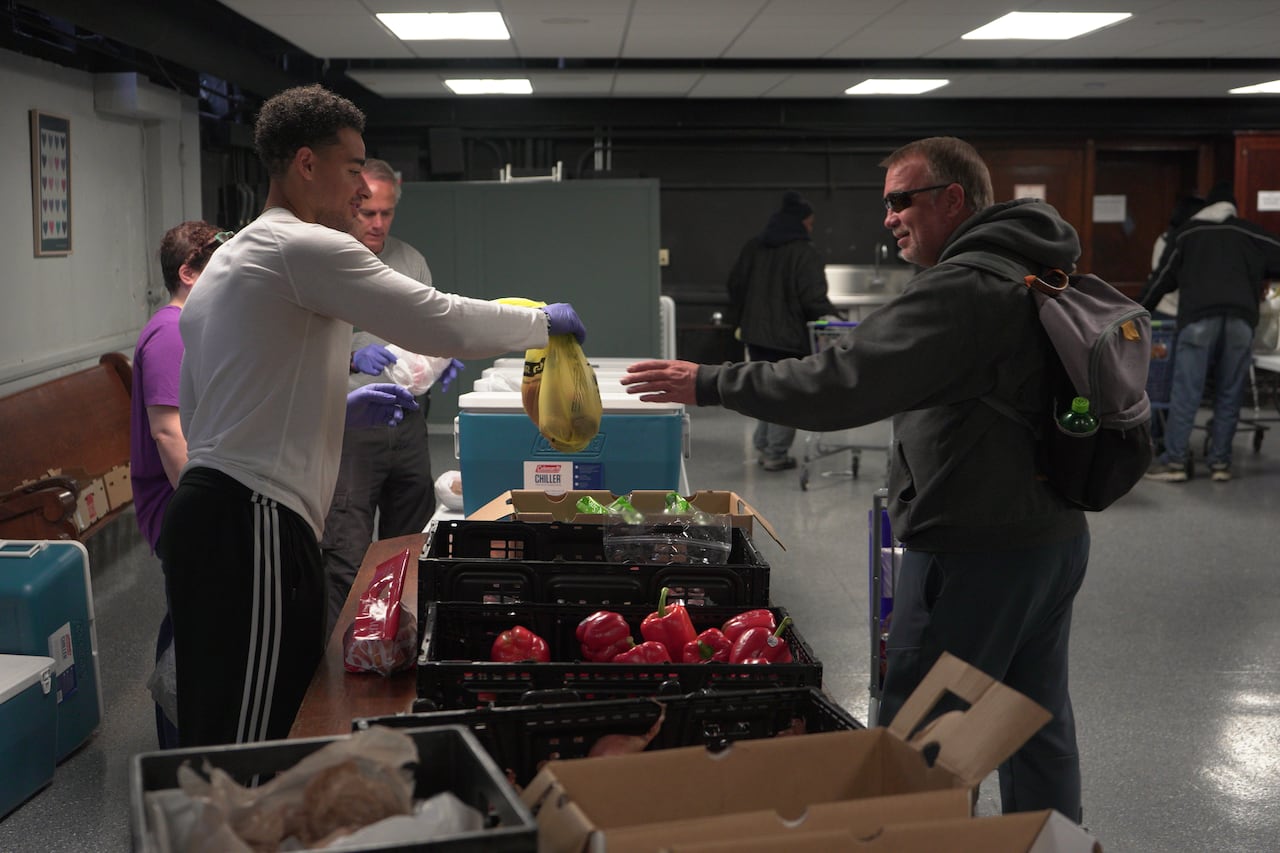
A volunteer hands a bag of groceries to a man at the Central Christian Church food bank in Indianapolis, Ind., on Saturday. Food bank officials say they will be under strain in November if a deal isn’t reached to keep funding the main food assistance program used by more than 40 million Americans. (Obed Lamy/The Associated Press)
States across the U.S. are alerting food assistance recipients that their benefits might not be distributed starting Saturday if the federal government shutdown extends into its fourth week.
Notices on over two dozen state websites highlight the risk of an unprecedented benefit gap in November for individuals relying on the Supplemental Nutrition Assistance Program (SNAP), commonly known as food stamps, as well as for nearly seven million participants in the Special Supplemental Nutrition Program for Women, Infants, and Children (WIC).
The shutdown, which commenced on October 1, has now reached the second-longest duration in history.
Qualifying low-income families enrolled in SNAP receive monthly debit cards issued by the federal government, which can only be used for purchasing groceries at designated stores and farmers’ markets. On average, SNAP provided $187 per month to 41.7 million individuals, impacting roughly one in eight Americans.
In the fiscal year that concluded on September 30, 2024, SNAP expenditures exceeded $100 billion, which includes the portion of state administrative expenses funded by federal taxpayers.
States struggle to bridge the gap
Democratic senators, representatives, and mayors have urged Agriculture Secretary Brooke Rollins to utilize a SNAP contingency fund, estimated by the Center on Budget and Policy Priorities to be approximately $5 billion, to cover November benefits. This amount represents about 60 percent of the cost for a single month of benefits.
However, on Friday, the USDA announced it would not access these funds, opting instead to reserve them for natural disasters and other emergency situations.
“Bottom line, the well has run dry,” stated a notice from the department. “At this time, no benefits will be issued on November 1. We are nearing a critical point for Senate Democrats.”
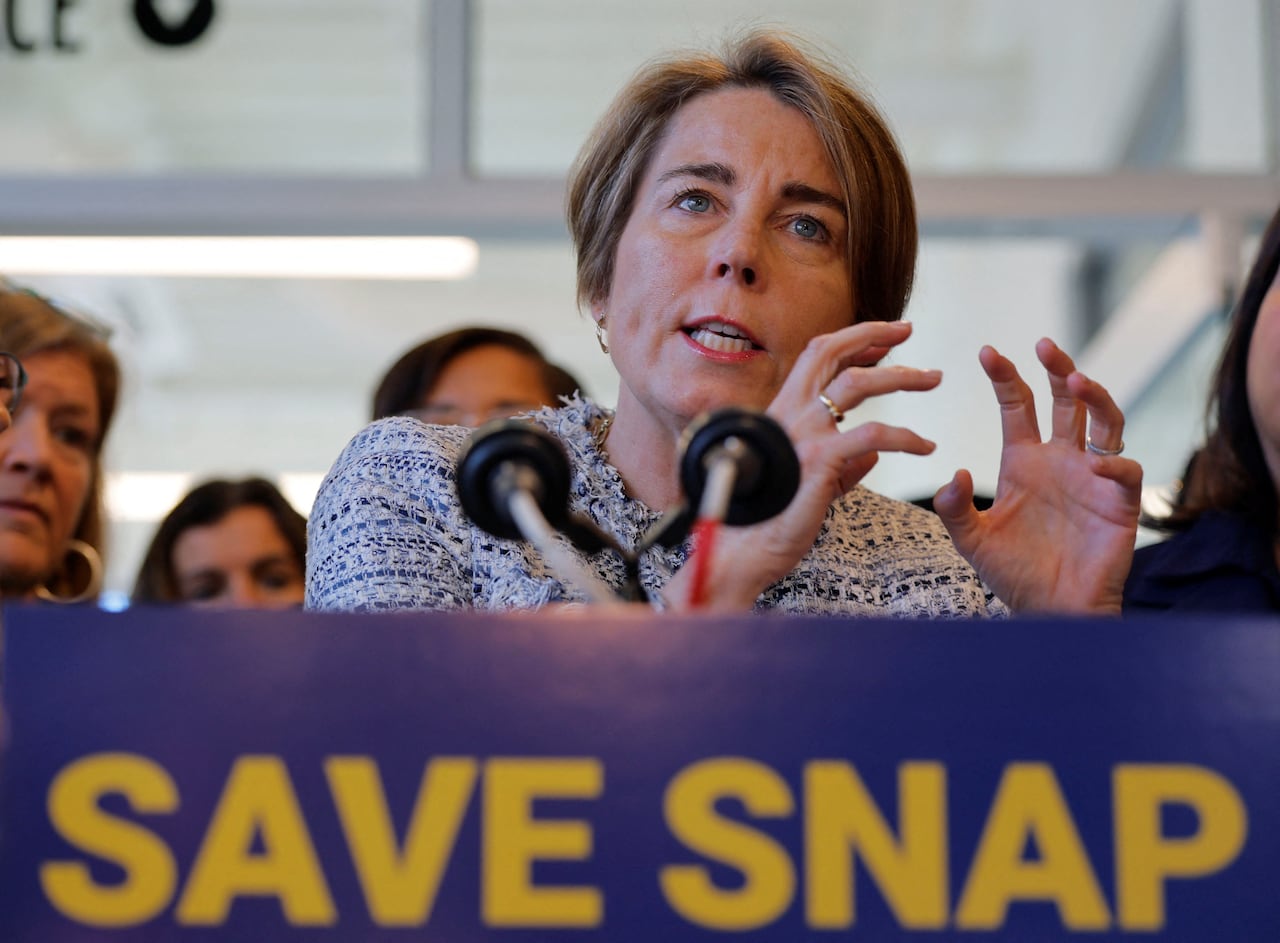
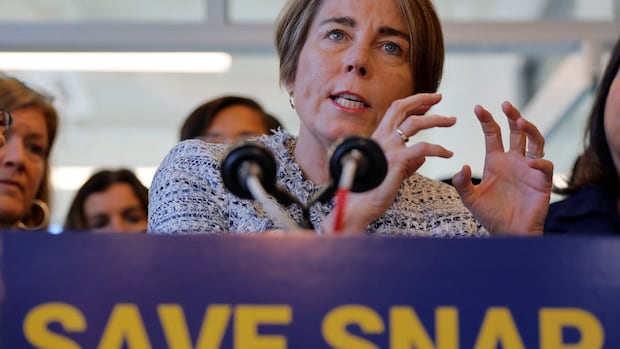
Massachusetts Gov. Maura Healey is shown on Friday, urging the federal government and U.S. President Donald Trump to fund the Supplemental Nutrition Assistance Program (SNAP), at a news conference in Boston. (Bryan Snyder/Reuters)
The unusually political tone from a federal agency underscores that Democrats have withheld their votes on a spending bill. They maintain that they will not agree to reopen the government until Republicans engage in negotiations regarding the extension of subsidies under the Affordable Care Act, which are set to expire for millions of Americans at the end of the year.
Conversely, Republicans contend that Democrats must first consent to reopen the government before any negotiations can commence.
Democratic Senator Chris Murphy of Connecticut criticized Republicans and President Donald Trump for their refusal to negotiate.
“The reality is, if they sat down to attempt negotiation, we could probably reach an agreement quite swiftly,” Murphy stated on CNN Sunday. “We could reopen the government by Tuesday or Wednesday, and there would be no crisis in the food stamp program.”
While awaiting federal action, some states have taken initiative.
California and New York have announced plans to send funds to food banks, while Virginia declared a state of emergency on Thursday to finance November benefits.
However, other states have encountered limited options for assisting SNAP beneficiaries. The Alaska Department of Health indicated on its website that it explored using state funds for benefits but deemed it unfeasible.
“Reprogramming the federal system to draw funds from the state treasury is not practicable due to vendor and system timeline constraints,” the website stated.
Additional states are advising SNAP recipients to prepare for a potential halt in benefits. For instance, Arkansas and Oklahoma are recommending that recipients locate food pantries and other organizations that provide food assistance.
However, nine food banks and anti-hunger organizations across eight states informed Reuters that they would struggle to manage the increased demand if November SNAP benefits are not issued.
“The reality is, there’s not much we can accomplish on our own. For every meal we provide, SNAP supplies nine. We cannot compensate for the shortfall, and charity cannot substitute for government support,” remarked Claire Neal, CEO of the MANNA FoodBank located in Mills River, N.C.
‘We’re in some real trouble’: food bank CEO
Food banks have been experiencing unprecedented demand in recent years as rising food prices and the lingering impacts of the COVID-19 pandemic put pressure on household finances.
In 2023, over 50 million individuals received food from food banks, pantries, and other charitable organizations, up from approximately 40 million in 2019, according to Feeding America, a national network of food banks.
The U.S. government can literally shut down — but Canada’s can’t. Here’s why the systems work so differently.
The Facing Hunger Foodbank, which supports families in West Virginia, Kentucky, and Ohio, has had to explain to clients this year why the organization is occasionally rationing bags of potatoes. The food bank has had to reduce its distributions as soaring food prices and increasing demand strain its financial resources.
“Eliminating SNAP funding leaves people with no resources. We’re in serious trouble,” stated Cynthia Kirkhart, the food bank’s CEO.
The ongoing government shutdown is not the sole factor that could limit access to SNAP. Legislation that Congress passed and Trump signed in July also stipulates modifications to the program. Adults with children aged 14 to 17 will no longer be exempt from work requirements to qualify for benefits, nor will individuals aged 55 to 64.
These changes are currently in effect, and some individuals may begin to lose coverage around early January.
Another adjustment in the law will take effect in the coming years. Starting in October 2026, states will be responsible for covering three-fourths of the administrative costs, compared to the current half. While Congress may alter some of these policies, merely resuming government operations will not amend them.
Tag: rewrite-pending