


Kevin Duke believes that replacing the lead pipes in his residence appears to be impractical.
The senior from Thunder Bay, Ontario, became aware of the lead pipes only when the City of Thunder Bay started distributing NSF/ANSI-53-approved water filter pitcher kits in 2020. He mentioned that a couple of years ago, the city upgraded the main water line on his side of the street, but the piping from there to his water meter consists entirely of lead.
“I seriously doubt that I would be able to afford to replace all of that,” Duke remarked.
Prior to the mid-1950s, lead service pipes were frequently utilized to connect residences to municipal water mains. However, as studies revealed the health risks associated with the toxic metal, the National Plumbing Code of Canada prohibited lead piping in 1975 and lead solder in 1986.
Nevertheless, numerous older homes throughout the country still contain lead pipes. Earlier this month, the Canadian Environmental Law Association (CELA) released a report urging Ontario municipalities to cease only partially replacing lead service lines.
“Following a partial replacement, there can be extremely high levels of lead in the months and years afterward because the lead line has been disturbed, which can cause larger particles to enter your home,” explained Julie Mutis, a community outreach worker for CELA and the lead author of the report.

A close-up of a lead pipe featured on the City of Hamilton’s website. If one gently scrapes the surface of a lead pipe with a loonie, the underlying metal will appear shiny and silver, according to the City of Thunder Bay. (City of Hamilton)
The association is advocating for cities to enact bylaws mandating property owners to replace the lead piping on their side of the property line, along with providing income-adjusted financial assistance to help offset the costs.
“When they identify a lead pipe, they should not only remove the section on the city side but also eliminate the remaining lead pipe that continues to pose a risk to health,” Mutis stated.
“This would ensure that individuals who are unaware of the presence of lead pipes receive assistance in having them removed.”
Hamilton is currently the sole municipality in Ontario with a bylaw aimed at preventing partial replacements of lead service lines. Mutis noted that several communities in Quebec and Saskatchewan have already implemented similar regulations; for instance, Saskatoon is on track to replace all lead service lines by 2029.
Following a partial replacement, there can be extremely high levels of lead in the months and years afterward because the lead line has been disturbed, which can cause larger particles to enter your home.Julie Mutis, community outreach worker with the Canadian Environmental Law Association
In Thunder Bay, the city provides an interest-free loan program and a $1,500 grant for qualified low-income residents and seniors. However, Duke doubts whether this is sufficient.
“I believe they should consider the household income and the estimated cost of the work required at that home,” he said. “I understand that it may be somewhat complicated, but they should be able to find a solution.”
$350M class-action lawsuit in progress
Corrosion control initiatives are one method to tackle lead issues, but their effectiveness can vary. In 2018, the City of Thunder Bay started adding a small quantity of sodium hydroxide to its water supply to help reduce lead leaching from aging pipes.
After introducing the chemical, residents began reporting pinhole leaks in their copper pipes, leading to flooding in hundreds of homes. The city ceased using sodium hydroxide in early 2020, at which point it began distributing NSF/ANSI-53-approved water pitchers and filters to residences with known lead service lines.
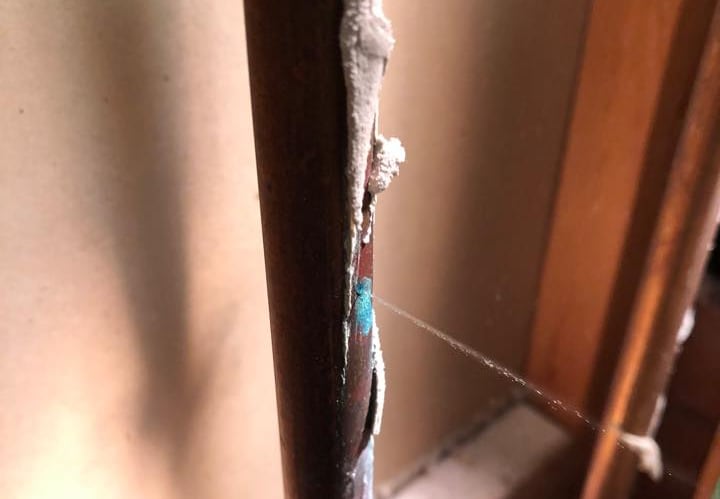
A file photo from 2020 showing a pinhole leak in a copper water line at a residence in Thunder Bay, Ontario. ( Leslie Wilson/Facebook)
Later that same year, a $350-million lawsuit was filed against the city by Thunder Bay resident Patsy Stadnyk, representing everyone affected by the leaks. The lawsuit seeks damages for all residents, businesses, and organizations whose pipes suffered damage or were at risk of damage or failure due to the city’s sodium hydroxide introduction into the water supply.
The city is mounting a defense against the lawsuit, with none of the claims having been substantiated in court.
David O’Connor, a partner at the Toronto law firm Roy O’Connor LLP, is representing the plaintiff. He mentioned that the case has not yet entered the discovery phase, but he hopes for a pretrial to be scheduled by late next year and aims to have the issue resolved by the end of 2026.
A smaller $350,000 lawsuit against the city related to the leaks has been put on hold, as the plaintiff decided to join the class action instead.
‘Lead is even more hazardous than we realized’
According to the city’s 2024 annual drinking water-quality report, Thunder Bay has approximately 5,586 publicly owned and 7,818 privately owned lead service lines linked to its water distribution system.
Even minimal exposure to lead has been associated with severe health consequences, particularly in children, according to the CELA report. These effects include:
- Decreased IQ.
- Learning challenges.
- Behavioral issues.
- Effects on fine motor skill development.
“As time progresses, we are discovering that lead is even more dangerous than previously thought, and it’s crucial that we do not fall behind on the best practices being adopted across the country,” remarked Mutis.

Julie Mutis works as the community outreach worker for the Canadian Environmental Law Association (CELA). She stresses the urgency of addressing lead issues while ensuring that those unable to afford the replacement of lead service lines are not neglected. (Submitted by Julie Mutis)
A representative for the City of Thunder Bay stated that they were “unable to accommodate interviews currently” regarding lead issues. Instead, they provided an email statement to CBC News, emphasizing the city’s commitment of $25 million over a two-decade span to replace lead service lines.
The city continues to replace public lead lines as other infrastructure projects are completed, such as watermain upgrades and during capital renewal projects. Residents can also apply for the priority lead replacement program for the city to replace publicly owned lines on their streets.
Seeking an affordable resolution
Councillor Andrew Foulds proposed the resolution for Thunder Bay council to examine the loan and grant program to assist with privately owned lead service line replacements. He questions whether mandating these replacements serves the community’s best interests.
“The key issue is whether you prefer a punitive approach or a more incentivized one. Personally, I’m not inclined to push homeowners who are already struggling into additional financial distress,” Foulds commented.
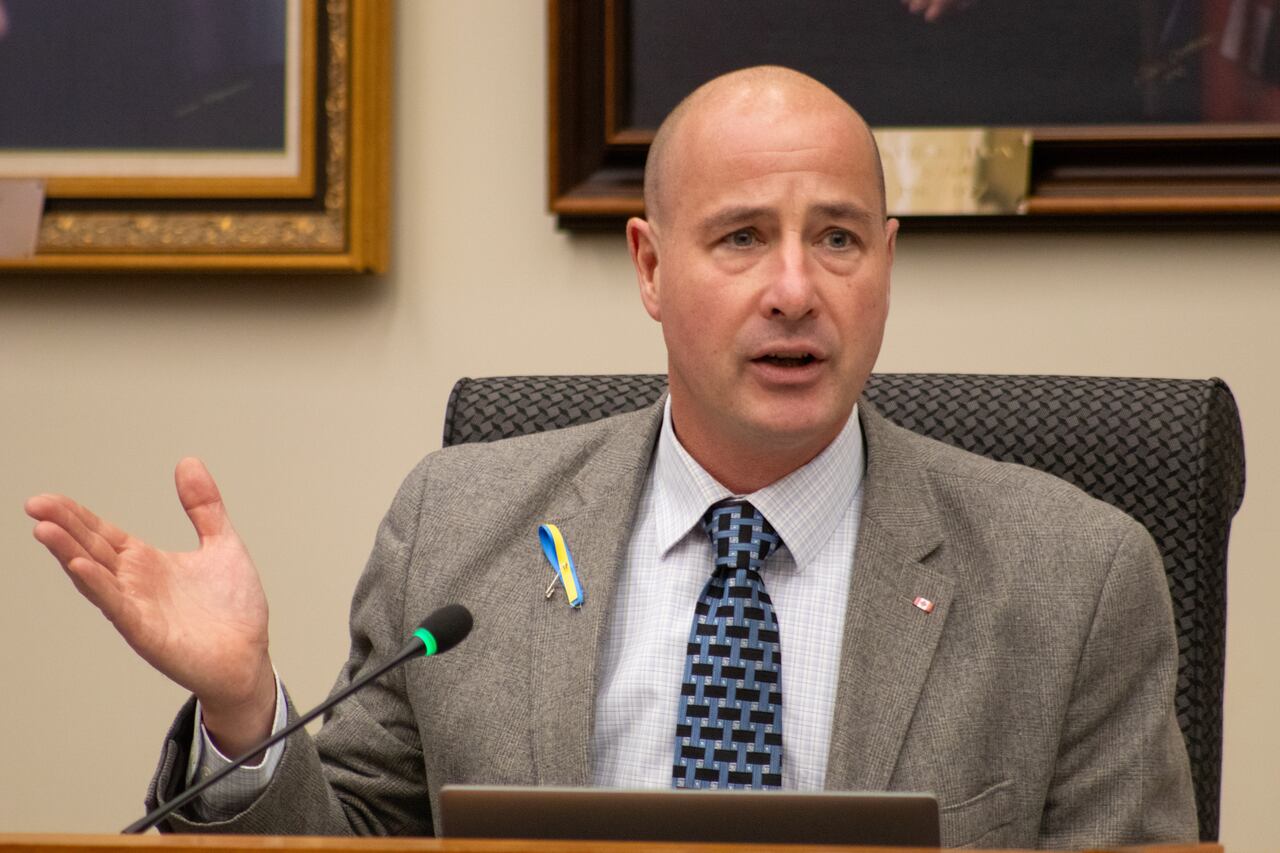
Coun. Andrew Foulds expresses concerns over the astronomical costs of completely replacing all lead service lines in Thunder Bay. Nevertheless, he acknowledges the serious health risks associated with lead exposure and emphasizes the need to assist residents in accessing funding for pipe replacements. (Sarah Law/CBC)
“How can we make our financial incentives more accessible and fairly distributed among residents?”
By the close of 2024, the city had approved 118 interest-free loan applications for homeowners replacing privately owned lead pipes.
“The challenge is that completely resolving this issue would require an immense amount of funding that no municipality can manage all at once,” Foulds remarked. “How do we activate something with that level of urgency?”
Paul Berger, an associate professor at Lakehead University and lead organizer for Citizens United for a Sustainable Planet, stated that it is logical to fully replace lead service lines instead of opting for partial replacements.
“I believe it is a sound recommendation to have a bylaw that requires homeowners to address their half of the lead line. This will enhance property values,” Berger noted.
“However, it’s crucial that this is done with equity in mind, ensuring the city makes accommodations to keep it affordable for residents.”
Another critical aspect is ensuring that residents are well-informed about lead issues and the city’s strategies to tackle them, he emphasized.
“People often overlook issues they believe do not affect them until they suddenly realize the impact, at which point they scramble for information.”