
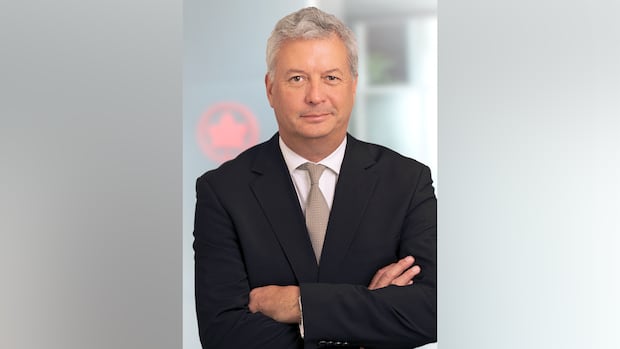

Air Canada announced on Monday that its president and CEO, Michael Rousseau, will step down in the fall after nearly two decades with the airline. This news comes just a week after he attracted attention for releasing a message of condolence in English only after the tragic crash of Flight 8646 in New York.
According to a statement from an airline representative to CBC News, “Mr. Rousseau has reached a natural retirement age. His decision aligns with the Board’s long-standing focus on planning for CEO succession,” a process that has been ongoing internally for over two years.
In a communication to employees shared with Radio-Canada, Rousseau expressed his pride in representing the airline but acknowledged that it was time for him to retire. He plans to continue leading the company and will remain on its board of directors until the conclusion of the third quarter.
On March 22, Air Canada Flight 8646, which departed from Montreal, tragically collided with a fire truck while landing at LaGuardia airport, resulting in the deaths of two pilots — first officer Mackenzie Gunther and Captain Antoine Forest — and injuring many others.
The day following the incident, Rousseau conveyed his condolences to the victims’ families in a video. However, he faced backlash for delivering the message predominantly in English, with only a brief introduction and conclusion in French.
One of the deceased pilots, Forest, was a francophone hailing from Coteau-du-Lac, Quebec. Air Canada, based in Montreal, has a policy that mandates employees to communicate in both of Canada’s official languages.
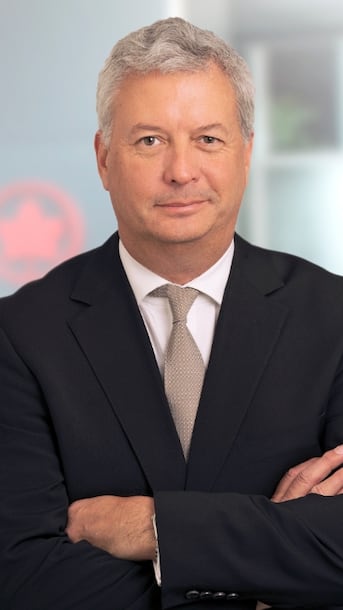
Air Canada CEO Michael Rousseau will retire by the end of the third quarter, after nearly two decades with the airline, the company said on Monday. The announcement comes a week after he made headlines for speaking only English in a message of condolence following the crash of Flight 8646 in New York.
Debate ignited by CEO’s language choices
Politicians from various parties at both federal and provincial levels quickly responded.
Prime Minister Mark Carney criticized Rousseau’s message, stating it reflected “a lack of judgment” and “empathy,” while Bloc Québécois Leader Yves-François Blanchet described it as a “sad and gross lack of respect” towards Forest’s family.
Quebec Premier François Legault called for Rousseau’s resignation, and the Quebec National Assembly passed a motion advocating for it.
On the other hand, former Alberta Premier Jason Kenney defended Rousseau, suggesting that the CEO’s focus should be on safety and service reliability rather than language training.
Rousseau later issued an apology on Thursday, expressing that he was “deeply saddened” that his “inability to speak French” overshadowed the mourning families’ grief. He acknowledged that, despite years of lessons, he still cannot “adequately” express himself in French — a statement that many found inadequate.
By the end of the week, Rousseau had been called to Ottawa to appear before the Official Languages Committee. CBC News has contacted both Air Canada and the Senate committee to confirm Rousseau’s appearance plans.
A committee clerk informed CBC News that the motion to summon Rousseau remains in effect. He has been invited to testify by May 1, although no specific date has been set yet, according to the clerk.
As of Monday, the Office of the Commissioner of Official Languages reported receiving 2,360 complaints regarding his comments.
Responses to Rousseau’s impending departure
During a housing announcement in Ontario, Prime Minister Carney remarked that Rousseau’s decision to retire was “appropriate” in his opinion.
“He was an effective airline operator and accomplished many things, and I commend him for that, but leadership comes with significant responsibilities,” Carney stated.
The prime minister emphasized that the next CEO of Air Canada must be bilingual, noting, “That should have been obvious from the outset, but recent events have highlighted this necessity.”
Transport Minister Stephen MacKinnon expressed gratitude to Rousseau for his service in a social media post. Many politicians from Quebec responded positively to the announcement.
On X, Legault praised Air Canada’s announcement, stating that the next CEO should be proficient in French as a “matter of respect for employees, francophone customers, and all Quebecers.”
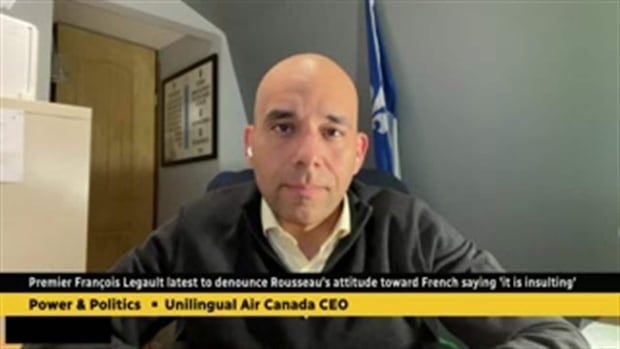
Christopher Skeete, Premier François Legault’s parliamentary secretary, says Air Canada is due for an introspections and should use this opportunity to turn the page on “what has been a delinquent record on official languages”.
The two politicians currently competing for Legault’s position as leader of the Coalition Avenir Québec party, Bernard Drainville and Christine Fréchette, also shared their thoughts on social media.
On Facebook, Drainville stated that Rousseau’s choice “was the only reasonable decision,” while Fréchette emphasized that the company must appoint a bilingual CEO.
“The company must adhere to the Official Languages Act; it is time for this to be reflected at the top levels of the organization,” she wrote.
Although Fréchette initially did not call for the CEO’s resignation, she later changed her stance. Drainville criticized her delay during the CAQ leadership debate over the weekend.
Analyst predicts next CEO must be bilingual
This situation isn’t Rousseau’s first encounter with criticism regarding his French language skills.
In 2021, he delivered a speech predominantly in English to a business audience in Montreal. When questioned about this by the Quebec media, Rousseau struggled to respond in French, indicating that he had lived in Montreal for 14 years without needing to speak the language.
At that time, then-deputy prime minister Chrystia Freeland sent a letter to Air Canada’s board urging Rousseau to enhance his French skills and to incorporate this into his annual performance evaluation.
John Gradek, an aviation management program lecturer at McGill University, stated that he was not surprised by Rousseau’s retirement news and predicted that the next CEO’s qualifications will likely mandate proficiency in French.
He remarked that the involvement of the prime minister and transport minister in this issue “was the final straw on this one, even though [Rousseau] essentially indicated on Thursday that he was not resigning. Well, he is done,” Gradek commented.
Regarding the timing of the announcement, he added, “It became a matter of when Mr. Rousseau would leave, and the political pressure applied to Air Canada at both the provincial and federal levels compelled him to make a decision swiftly.”