

On Monday, Thailand initiated airstrikes along its contentious border with Cambodia, with both nations accusing one another of violating a ceasefire that had previously halted hostilities earlier in the year.
The long-standing border conflict escalated into five days of fighting in July, resulting in numerous casualties among soldiers and civilians. U.S. President Donald Trump urged the two Southeast Asian nations to agree on a truce in October, but friction has persisted.
According to the Thai military, over 50,000 individuals have fled their homes near the border to seek refuge, while Cambodia’s Information Minister Neth Pheaktra reported that several communities in border regions have also been evacuated.
Recent clashes have reportedly resulted in the deaths of at least one Thai soldier and four Cambodian civilians, according to officials.
In a televised address, Thai Prime Minister Anutin Charnvirakul stated that military actions would proceed as needed to safeguard the country and ensure public safety.
“Thailand has never desired violence. I want to emphasize that Thailand has never instigated a conflict or an invasion, but will not accept any infringement of its sovereignty,” he remarked.
The latest violence followed a gunfire exchange on Sunday.
-
Thailand, Cambodia agree to ceasefire after clashes displace more than 300,000 people
-
Thai PM says dispute with Cambodia could ‘escalate into a state of war’
The ceasefire faced challenges in early November after Thai soldiers were injured by landmines, prompting Thailand to announce the indefinite suspension of the agreement’s enforcement. Both nations continue to blame each other for the ongoing issues, even while they are expected to collaborate on mine clearance.
Strained ceasefire
In mid-November, Trump stated that he had intervened to maintain the ceasefire as tensions flared between the two nations.
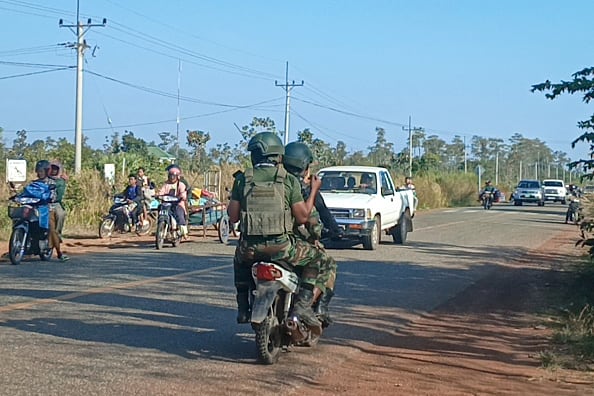
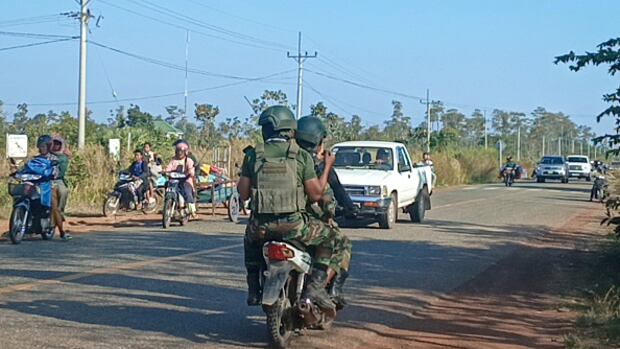
Cambodian soldiers on a motorbike as local residents evacuate following the clashes along the Cambodia-Thailand border in Preah Vihear province on Monday. (AFP/Getty Images)
However, another short-lived bout of fighting occurred along the border on Sunday, with both sides claiming the other fired first. The Thai military reported that Cambodian gunfire injured two Thai soldiers, which prompted a retaliation that lasted approximately 20 minutes. Cambodia asserted that the Thai side initiated the firing and that its own forces did not respond.
On Monday, Thai army spokesperson Maj. Gen. Winthai Suvaree stated that Cambodian troops opened fire first in various regions of Thai territory. He confirmed the death of one Thai soldier and injuries to four others, along with civilian evacuations from the impacted areas.
The Thai military deployed aircraft to target military positions in multiple locations to combat Cambodian supporting fire, he explained.
Cambodian Defence Ministry spokesperson Maly Socheata claimed that the Thai military initiated the attack on Monday, and that Cambodia refrained from retaliating during the initial strikes.
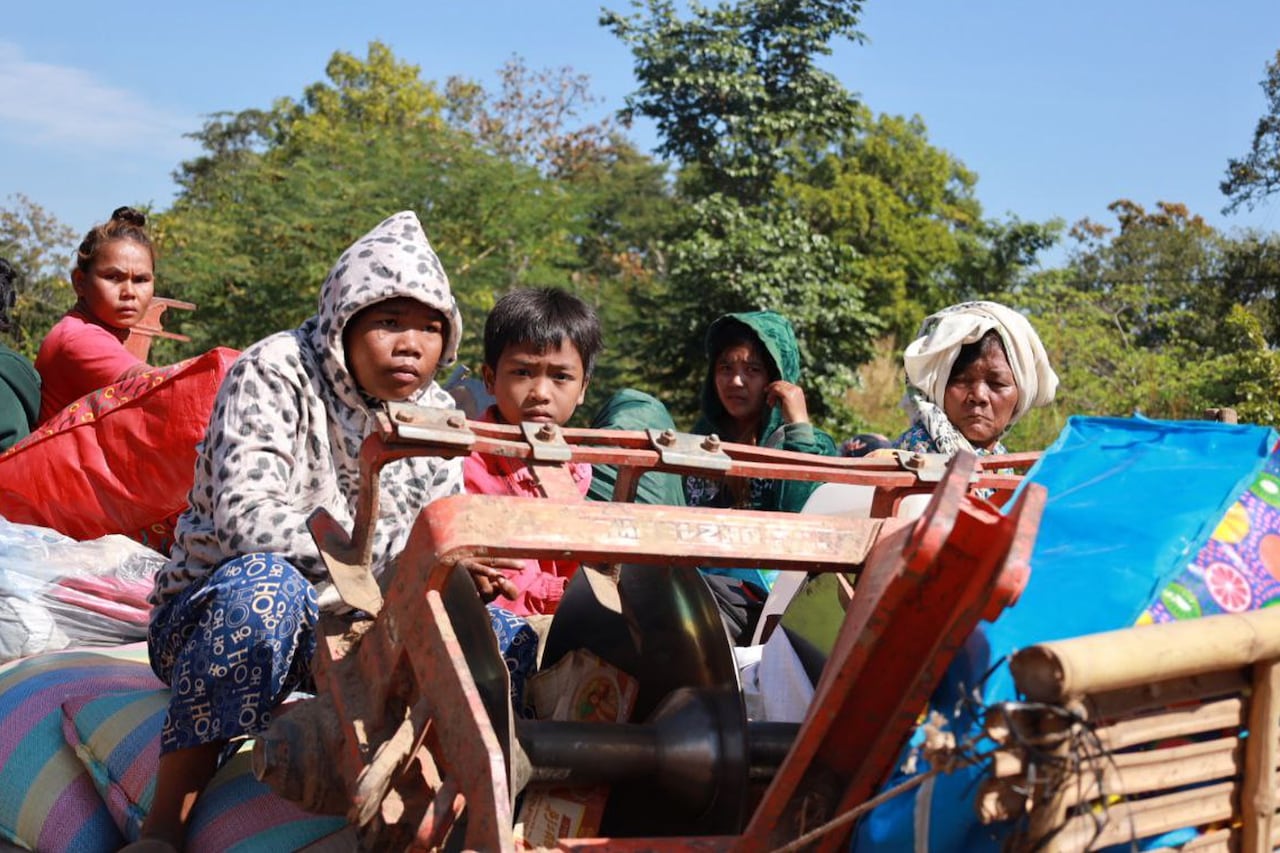
A Cambodian family on a tractor as they flee from their home in Preah Vihear province, Cambodia, on Monday. (AKP/The Associated Press)
“Cambodia calls upon Thailand to immediately cease all aggressive actions that threaten regional peace and stability,” she stated.
Anwar Ibrahim, the Prime Minister of neighboring Malaysia, urged for calm in a statement shared on social media, expressing that his country is prepared to assist in preventing further conflict.
“Our region cannot afford to let long-standing disputes spiral into cycles of confrontation,” he conveyed.
Centuries of rivalry
The history of animosity between Thailand and Cambodia stretches back centuries to when they were rival empires.
The current territorial disputes largely arise from a 1907 map created during Cambodia’s French colonial period, which Thailand contends is flawed.
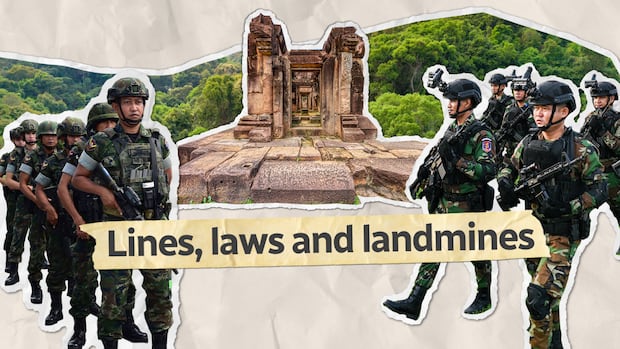
A century-old border dispute between Thailand and Cambodia has boiled over after Thai and Cambodian forces fired on each other in a deadly exchange. Andrew Chang explains what spurred this recent violence and why neither side appears eager to back down.
In 1962, the International Court of Justice granted Cambodia sovereignty over a region that includes the ancient Preah Vihear temple, a decision that still causes resentment among many Thais.
The ceasefire does not provide a clear resolution to the fundamental issues of the dispute, which revolves around the long-standing disagreements regarding the border demarcation.