
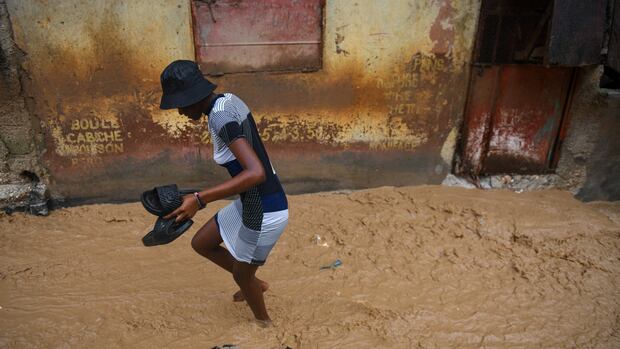

On Wednesday, Hurricane Melissa caused numerous fatalities and extensive devastation across Cuba, Jamaica, and Haiti, disrupting power supplies and displacing residents in flooded areas.
In Jamaica’s St. Elizabeth parish, a landslide obstructed the main roads of Santa Cruz, transforming streets into muddy quagmires. Residents worked to clear water from their homes while attempting to recover their possessions. Strong winds tore off part of the roof of a high school that was serving as a public shelter.
“I have never seen anything like this during my years living here,” remarked local resident Jennifer Small.
The full scale of destruction from the catastrophic Category 5 hurricane remained uncertain on Wednesday, as widespread power outages and hazardous conditions continued.
According to Haiti’s Civil Protection Agency, at least 25 individuals have lost their lives, and 18 others are unaccounted for, with the agency updating the death numbers downward on Wednesday. Twenty of the deceased and ten of the missing were from a southern coastal town that experienced flooding severe enough to destroy numerous homes.
“I am overwhelmed by the circumstances,” stated Jean Bertrand Subreme, the mayor of Petit-Goave, a coastal town in southern Haiti, as he urgently requested assistance from the government to rescue those affected.
In Cuba, officials reported buildings that had collapsed, mountain roads that were impassable, and roofs that had been blown off structures, with the most severe damage occurring in the southwest and northwest regions. About 735,000 individuals were still housed in shelters, according to authorities.
“It was like hell. The entire night was horrendous,” expressed Reinaldo Charon from Santiago de Cuba. The 52-year-old was among the few venturing outside on Wednesday, protected by a plastic sheet in the sporadic rain.
Melissa moved across Cuba as a Category 3 hurricane but has since been downgraded to Category 2.
As of Wednesday afternoon, Melissa had maximum sustained winds of 150 km/h and was advancing northeast at 26 km/h, as reported by the U.S. National Hurricane Center in Miami. The hurricane was located approximately 135 kilometers southeast of the central Bahamas.
Bahamas authorities were in the process of evacuating several individuals from the southeastern part of the archipelago as they prepared for Melissa’s impact.
The storm’s center is predicted to traverse the southeastern Bahamas later on Wednesday, potentially causing storm surges of up to two meters in the region. By late Thursday, Melissa is anticipated to pass just west of Bermuda.
Travel warnings issued for Canadians
The Canadian government has advised its citizens to refrain from traveling to several affected areas, including:
- Jamaica.
- Granma, Santiago de Cuba, Guantanamo, Holguin, and Las Tunas in Cuba.
- Haiti.
Canadians are also being urged to avoid all non-essential travel to:
- Southeastern and central Bahamas.
- Turks and Caicos Islands.
- Bermuda.
Any Canadians requiring emergency assistance can reach out to the Emergency Watch and Response Centre at any time, including via the dedicated email melissa.sos@international.gc.ca.
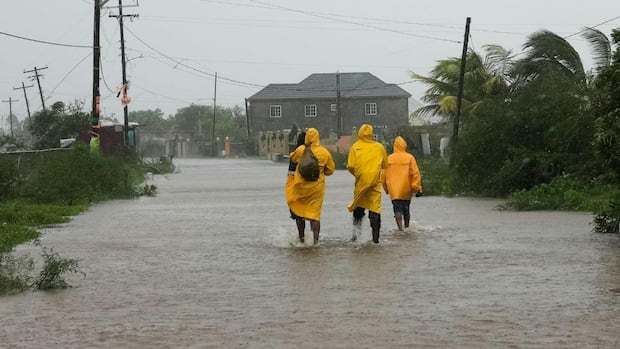
After making landfall in eastern Cuba as a Category 3 storm, Hurricane Melissa has left more than 500,000 residents in Jamaica without power due to extensive flooding and downed trees and power lines.
In Jamaica, where the storm has been linked to at least eight fatalities, over 25,000 people sought refuge in shelters on Wednesday, with more arriving throughout the day as the storm rendered their homes uninhabitable. Dixon reported that 77% of the island was without electricity.
The power outages complicated damage assessments, leading Richard Thompson, acting director general of Jamaica’s Office of Disaster Preparedness and Emergency Management, to describe the situation as a “total communication blackout” in certain areas, speaking to the Nationwide News Network radio station.
“Recovery will take a while, but the government is fully mobilized,” Jamaican Prime Minister Andrew Holness remarked in a statement. “We are preparing relief supplies and are committed to restoring normalcy as quickly as possible.”
Officials from Black River, a coastal town in Jamaica with roughly 5,000 residents, made a plea for assistance during a news conference on Wednesday.
“Catastrophic is a mild term for what we are witnessing,” said Mayor Richard Solomon.
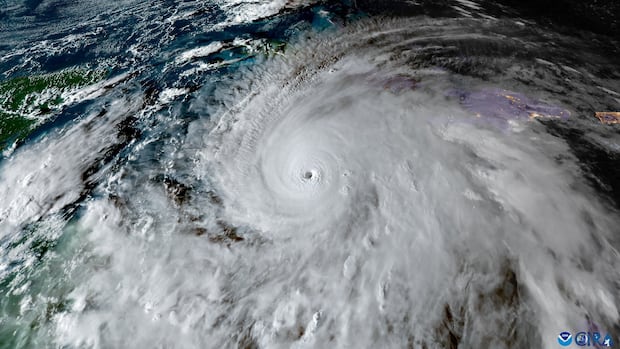
Hurricane Melissa’s Category 5 winds struck western Jamaica on Tuesday morning, marking one of the strongest landfalls in Atlantic history. CBC’s Johanna Wagstaffe discusses how Melissa may be indicative of a new era of hurricanes, fueled by record-high sea temperatures and slowed by a shifting jet stream.
‘The path ahead will be challenging’
“The path ahead will be challenging for Jamaica,” commented Desmond McKenzie, deputy chair of Jamaica’s Disaster Risk Management Council.
St. Elizabeth police Superintendent Coleridge Minto informed Nationwide News Network on Wednesday that authorities had discovered at least four bodies in southwestern Jamaica.
Additionally, one fatality was reported in the west where a tree fell on an infant, according to state minister Abka Fitz-Henley speaking to Nationwide News Network.
The government previously indicated plans to reopen all airports in Jamaica as soon as Thursday to facilitate the swift distribution of emergency aid.
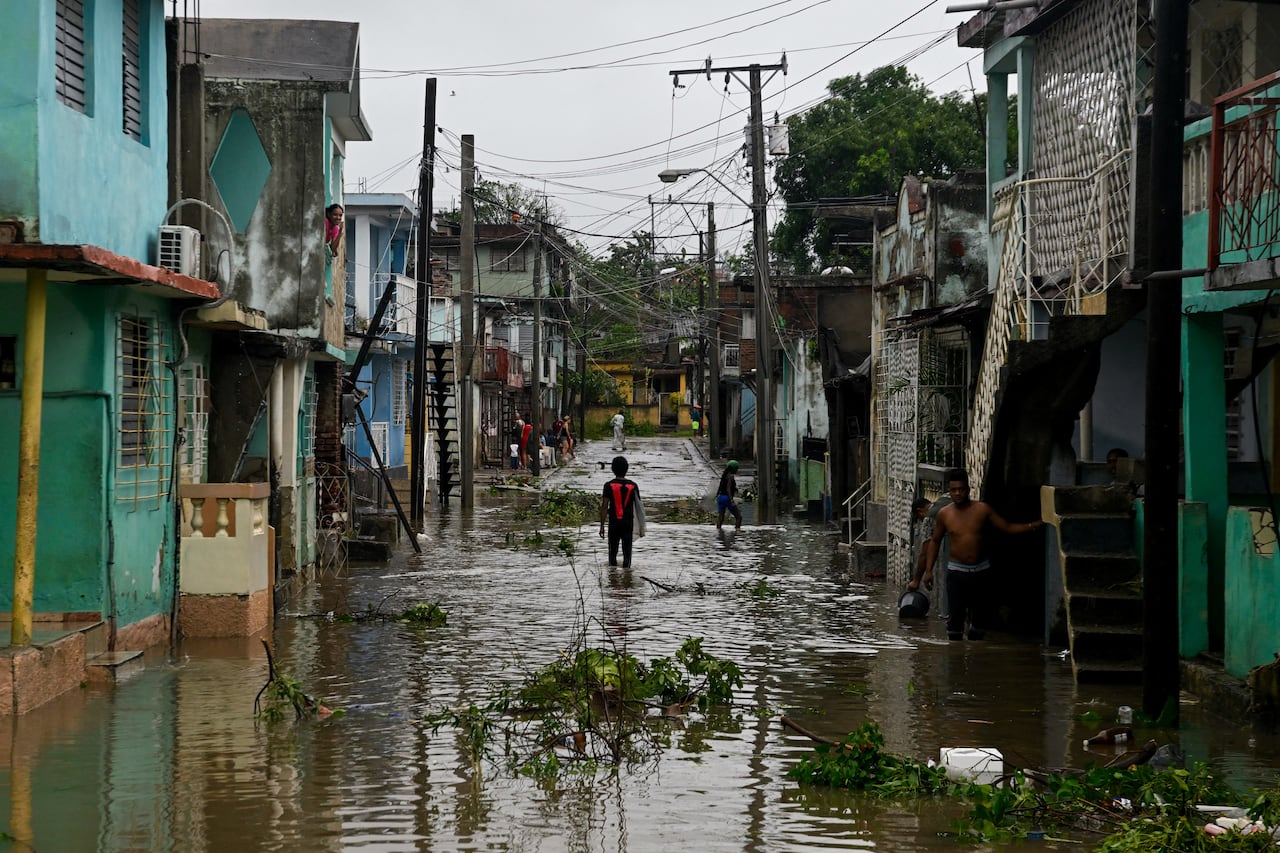
In the aftermath of Hurricane Melissa, residents are seen in a flooded street in Santiago, Cuba, on Wednesday. (Norlys Perez/Reuters)
The hurricane could exacerbate Cuba’s already critical economic situation, which has led to ongoing power outages, fuel scarcity, and food shortages.
In the eastern province of Santiago de Cuba, residents began clearing rubble from their homes on Wednesday after Melissa made landfall in the area hours earlier.
“Life is what truly matters,” said 54-year-old fisherman Alexis Ramos, as he assessed the damage to his home while using a yellow raincoat to shield himself from the sporadic rain. “Fixing this will be costly, very costly.”
Local news outlets displayed images of the Juan Bruno Zayas Clinical Hospital suffering significant damage: glass strewn across floors, waiting areas in disarray, and masonry walls collapsed.
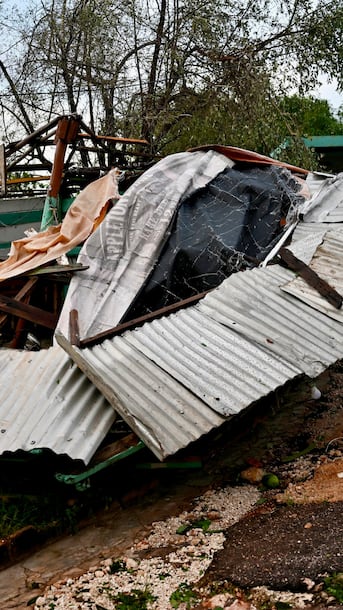
Hurricane Melissa wreaked havoc across Jamaica before making landfall in Cuba, resulting in widespread destruction, power outages, and dangerous flooding in some areas.
The United States has announced the deployment of rescue and response teams to support recovery efforts in the Caribbean, as Secretary of State Marco Rubio confirmed on Wednesday via X. He indicated that U.S. government officials were coordinating with leaders in Jamaica, Haiti, the Dominican Republic, and the Bahamas.
In June, the current U.S. administration reinstated an economic embargo on Cuba and prohibited tourism to the island.