
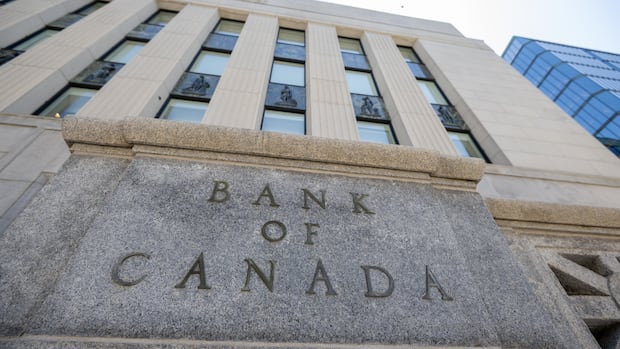

On Wednesday, the Bank of Canada reduced its primary interest rate to 2.25 percent, continuing a trend of rate cuts that commenced in June 2024.
Prior to this adjustment, CBC News consulted with economists, mortgage specialists, and financial advisors to clarify how interest rates function and the key indicators they monitor with each announcement from the Bank of Canada.
Here’s what reduced interest rates imply for individuals, small enterprises, and the broader Canadian economy.
What exactly are interest rates?
Interest refers to the fees that borrowers pay to access funds. It is also what a bank compensates a client for keeping their money in an account.
When securing a loan, “you receive the money, and you will need to pay back a portion of that loan over time,” stated Andrew DiCapua, the principal economist at the Canadian Chamber of Commerce in Ottawa.
“Included in that repayment is the interest.”
Banks such as RBC, Scotiabank, TD Bank, CIBC, and BMO establish “prime rates,” which serve as their base rates for lending to consumers. This rate typically includes an additional percentage based on an individual’s credit score.
Commercial banks typically align their ‘prime rate’ with the Bank of Canada’s benchmark rate. (The Canadian Press)
These prime rates are influenced by the overnight interest rate set by the Bank of Canada, a mechanism used by central banks to manage inflation.
In instances of high inflation, the Bank of Canada may elevate this benchmark rate to deter borrowing and spending.
DiCapua noted that this could prompt a potential car buyer to “opt for a smaller or less expensive vehicle” or even postpone the purchase entirely.
Conversely, when interest rates decline, borrowing becomes more affordable, often leading to increased consumer spending and consequently fostering economic growth.
Reduced interest rates can have various effects across different sectors of the economy. Therefore, the central bank carefully weighs the potential for growth against the inflation risk when determining its benchmark rate.
Impacts of interest rates on the housing market

Lower mortgage rates can motivate buyers to enter the housing market. (Showwei Chu/CBC)
Current homeowners, particularly those with variable-rate mortgages, are likely to experience immediate relief following a rate reduction by the Bank of Canada.
Their monthly mortgage costs will vary with changes in the rates.
Potential buyers may also feel encouraged to enter the market when lenders provide a lower variable rate, according to DiCapua.
Additionally, a lower benchmark rate could assist these prospective buyers in securing a lower “fixed” mortgage rate, which remains stable despite future interest rate fluctuations.

September and October usually see weaker market activity, but this year’s rally has been surprising. Less surprising is the central bank’s recent decision to cut its key interest rate by 25 basis points. Mark Ting from Foundation Wealth joins CBC’s Dan Burritt to analyze the implications for those seeking mortgages.
As a result, a decline in interest rates can stimulate home sales, which can subsequently affect the economy. DiCapua noted that “we frequently observe a psychological shift among buyers” when rates decrease.
“The easing of interest rates often sparks increased activity in the housing sector, especially for those who think, ‘If I don’t act now, I might miss out,’” she explained.
Effects of interest rates on small businesses
With reduced housing expenses, consumers may allocate more of their finances toward purchasing goods and services, channeling their funds into different areas of the economy.
These consumers “might find themselves with greater disposable income to buy more products from retailers or enjoy more experiences in the hospitality sector,” stated Simon Gaudreault, chief economist and vice-president of research at the Canadian Federation of Independent Business.
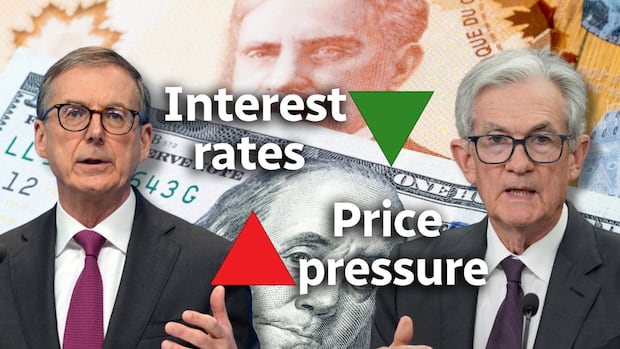
Typically, central banks raise interest rates to control pricing during inflationary periods, but both the Bank of Canada and the U.S. Federal Reserve have recently lowered rates. Andrew Chang discusses how tariffs imposed during Trump’s administration and a declining job market have led to this pivotal moment for the economies of both countries.
Moreover, small businesses may also have their own variable rate loans or mortgages (like a factory that borrowed funds for expensive machinery).
If rates decrease, “that is positive news for [those] business proprietors,” remarked Gaudreault.
However, even with ongoing rate cuts by the central bank, lower interest rates do not automatically translate to a brighter outlook for businesses.
Recently, the Bank of Canada surveyed businesses regarding their economic sentiments, and the findings reflected a level of caution, especially in light of a trade conflict that has established uncertainty as a constant.
According to Gaudreault, businesses are facing challenges such as labor shortages and escalating operational expenses (like higher insurance costs), as well as increased resource prices driven by inflation and tariffs.
“There is considerable uncertainty right now, and a notable weakness in the economy, leading businesses to proceed with extreme caution regarding where they allocate their funds,” Gaudreault expressed.
“There isn’t much capital available for new investments or hiring. Many are conserving resources to address rising operational costs.”
How interest rates affect personal finances
Regarding personal loans—like the earlier car loan example—the expense of borrowing will diminish with prime rate reductions, according to Shannon Lee Simmons, a certified financial planner based in Toronto and founder of the New School of Finance.
The cost associated with borrowing via credit cards or lines of credit may also decrease due to lower debt payments, Simmons noted.
If the borrowing cost on a line of credit is elevated, a new homeowner might choose to delay renovations; however, lower rates could incentivize them to use credit for those improvements.

The interest charged by credit card companies is also influenced by the benchmark rate. (Jenny Kane/The Canadian Press)
However, lower interest rates may not be as favorable for Canadians who are trying to save and grow their assets, as financial institutions will offer less to consumers for maintaining their savings.
Receiving lower interest returns from savings accounts and Guaranteed Investment Certificates (GICs) can be “frustrating,” Simmons stated.
“Yet, if you are invested in the stock market and hold fixed income instruments like bonds, typically, when interest rates decline, bond prices increase. Thus, it really depends on your investment mix,” she commented.
What else should I know about rate cuts?
“The link between interest rates and prices [depends] on the rate of economic growth compared to the economy’s capacity to produce goods and services,” DiCapua explained.
When demand exceeds supply and the economy needs more workers, capacity, or machinery than is available, it can result in higher prices.
However, it can take time for changes in interest rates to permeate the economy. Economists traditionally believe these changes take approximately a year and a half, as noted by DiCapua.
“This is because the lending rate affects banks, which then modify their rates, and those rates—the prime rate utilized by banks—subsequently flow through various financial products and loans within the system,” he elaborated.

Bank of Canada governor Tiff Macklem initiated the reduction of the benchmark rate last summer. (Adrian Wyld/The Canadian Press)
He emphasized that the Bank of Canada’s decisions regarding interest rates serve as a clear indicator for Canadians seeking to understand “the direction of the economy.”
This indicator can shape public confidence in the economy, which “can influence consumer actions and business decision-making,” DiCapua remarked.
“This represents a form of soft power that the Bank of Canada possesses.”