
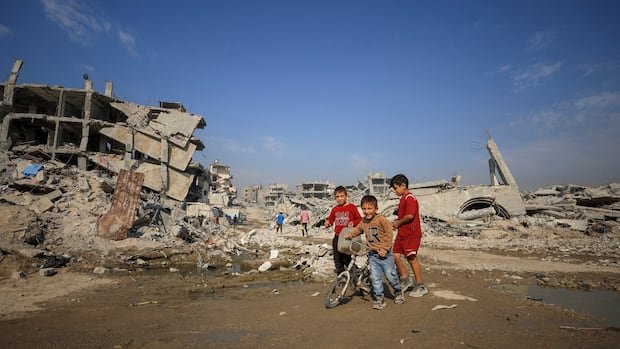

Thousands of aid packages containing shelter supplies and food are currently stockpiled in Jordan, Egypt, and Israel, according to humanitarian organizations. Concerns are raised over the limited aid reaching Gaza, almost a month after a truce was established between Hamas and Israel.
As the colder season approaches, hundreds of thousands of individuals in Gaza are still residing in deteriorating makeshift shelters, lacking adequate protection from the harsh weather conditions following Israel’s destructive military campaign over the past two years.
The Norwegian Refugee Council’s Middle East and North Africa Regional Director, Angelita Caredda, emphasized the urgent need to shield families from the upcoming winter challenges. Caredda noted that despite the ceasefire, Gaza has not received the expected influx of shelter materials, with only a fraction of the required supplies being allowed entry.
Since the ceasefire came into effect on October 10, Israeli authorities have turned down 23 requests from nine aid agencies to bring in essential shelter items such as tents, bedding, kitchen sets, and blankets. The NRC, leading a coalition of agencies working on Gaza’s shelter shortages, highlighted the severe consequences of delayed aid delivery, putting lives at risk.
The NRC also revealed that millions of shelter and non-food items are stuck in neighboring countries awaiting approval for entry, leaving around 1.5 million people in Gaza vulnerable to worsening conditions. The ceasefire agreement aimed to facilitate the entrance of numerous aid trucks into Gaza to provide food assistance to families, following reports of famine in the region.
Despite some improvements since the ceasefire, challenges persist in ensuring sufficient access to food, shelter, and fuel in Gaza. The United Nations humanitarian agency OCHA reported varying conditions between different regions of Gaza, with efforts ongoing to address malnutrition and supply shortages.
While progress has been made in aid distribution, gaps remain in delivering a diverse range of food items to prevent malnutrition. The situation is described as critical, with the looming winter months posing additional challenges for Gaza’s population. Hindered by limited fuel availability, cooking gas shortages exacerbate health risks for over 60% of Gazans resorting to burning waste for cooking.
The conflict that erupted in October 2023 has taken a heavy toll on the region, with significant casualties on both sides. Efforts to uphold the ceasefire agreement face obstacles, including delays in aid delivery and concerns over compliance with the terms outlined in the truce. Despite ongoing challenges, exchanges of remains and hostages are being carried out as part of the ceasefire agreement, albeit amid allegations of violations.
In conclusion, the situation in Gaza remains precarious, with urgent needs for sustained aid delivery to alleviate the humanitarian crisis affecting the population.