
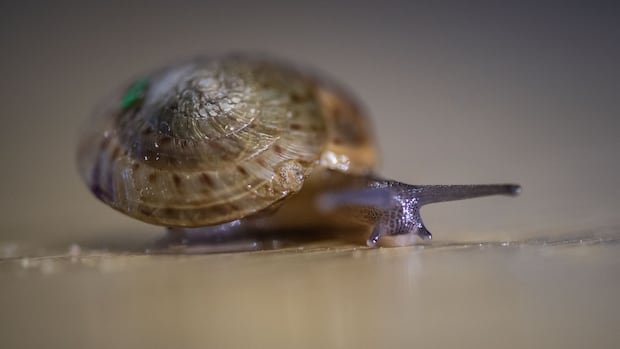

A decade ago, the greater Bermuda land snails were found surviving in an alleyway in Hamilton, the capital city. They had settled on concrete slabs near a dripping air conditioner. Today, these native creatures seem to be flourishing once more in the wild. The successful revival is credited to conservationists who bred over 10,000 snails in captivity and released them into protected wooded areas across the archipelago in the past seven years.
Katie Kelton, an invertebrate keeper at Chester Zoo in the U.K., expressed her delight, stating that the snails are thriving with confirmed breeding and increasing numbers. This conservation project, involving Chester Zoo, Biolinx Environmental Research in Canada, and the Bermuda government, will be detailed in an upcoming edition of Oryx, The International Journal of Conservation.
Despite the progress, the snails still confront threats from habitat destruction and invasive predators, challenges that previously pushed them to the brink of extinction. The tiny P. bermudensis snails, only the size of a button or quarter, are crucial to Bermuda’s ecosystems. They aid in decomposition, recycling nutrients in the soil, and providing calcium for natural predators like birds and reptiles.
The International Union for Conservation of Nature has classified P. bermudensis as critically endangered due to human activities encroaching on their habitat and introducing invasive predators. The successful re-introduction of the snails was acknowledged by the IUCN during Reverse The Red Day, which acknowledges efforts to preserve biodiversity.
Katie Kelton emphasized the dedication required to save the endangered snails, highlighting the challenges faced in understanding their needs and creating suitable breeding conditions. The re-introduction of the snails to protected woodland areas has shown positive outcomes, with populations expanding and integrating back into the local environment.
While the re-wilding efforts have been successful in some areas, challenges persist in ensuring the long-term survival of the snails. Continuous monitoring and conservation efforts are essential to safeguard these reintroduced colonies from threats and maintain their presence in Bermuda’s unique ecosystems.