

Following weeks of announcements regarding federal government spending in the lead-up to budget day, the most significant uncertainty remains the size of the deficit and the extent and areas where anticipated cuts will occur.
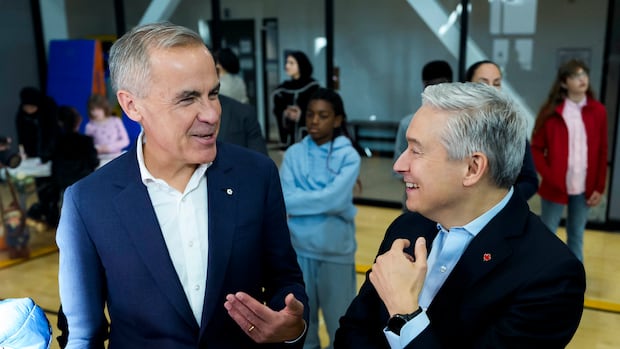
Prime Minister Mark Carney, along with his finance minister, François-Philippe Champagne, has consistently referred to Tuesday’s budget as a landmark initiative. Amidst a period of “disrupted” global economics and geopolitical instability, they have emphasized that Canada must “spend less” in order to “invest more.”
They have highlighted the need for “difficult choices” and “sacrifices” that must be made, preparing Canadians for potentially significant financial figures.
“This is a distinctive budget because the current situation requires us to make decisions that were not as urgent before, as they are now,” stated a senior government official, who spoke on condition of anonymity regarding the budget. “For decades, we have depended on a partnership with the U.S. that seemed robust, but is now deteriorating.”
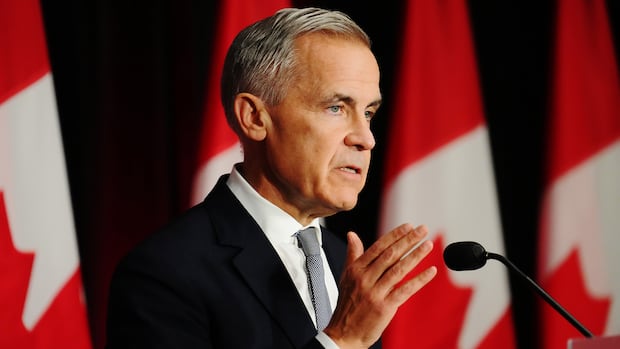
Prime Minister Mark Carney attempted to prepare Canadians for what may be a challenging budget, featuring substantial cuts and a significant deficit, while discussing his strategy to rejuvenate the country’s struggling economy with students at the University of Ottawa.
In a recent prime-time address, Carney described the budget as one that would empower and safeguard Canadians while fostering internal growth, raising expectations significantly.
“We are anticipating a serious budget at a serious time,” stated Theo Argitis, senior vice-president for policy at the Business Council of Canada.
“We have plenty of ideas, but what we lack is political courage in this country… The true test of seriousness will be their willingness to make certain trade-offs and prioritize specific areas,” he added.
The emphasis on “building Canada strong” has instilled hope among some stakeholders for prioritizing the enhancement of domestic capabilities rather than merely pursuing foreign business investments, like multinational-owned EV battery factories.
“I would be disheartened if we witnessed billions being funneled into programs and initiatives that do not bolster our economic strength and sovereignty. That would serve as a significant warning sign,” remarked Benjamin Bergen, president of the Council of Canadian Innovators (CCI).
“Our perspective is that economic resilience stems from domestic companies that are expanding and thriving.”
Bergen noted that despite the government’s silence regarding the specifics of the budget, the CCI has experienced unprecedented engagement with Ottawa concerning the development of domestic capacity over the past three months.
Some hints at what’s inside
Several pre-budget announcements have been made, dating back to June and including:
- $9 billion allocated for defense to be utilized by the end of March.
- An initial $13 billion for the Build Canada Homes agency.
- $2 billion for small nuclear reactors in Darlington, Ontario.
- $5 billion earmarked for a new Strategic Response Fund.
- $3.6 billion over three years dedicated to temporary EI measures due to tariff concerns.
- $1.8 billion to enhance federal policing capabilities.
- $370 million for a new biofuel production incentive.
- $77 million over four years allocated to the CRA for addressing non-compliance in the trucking industry.
- $660.5 million over five years to promote gender equality and safety (including new hires for the RCMP).
- $97 million over five years to establish a Foreign Credential Recognition Action Fund.
- $450 million over three years for a worker reskilling initiative.
Naturally, there will be numerous measures, investments, tax incentives, and other elements that will only be disclosed on the day of the budget announcement.
It is evident that a substantial increase in defense spending will feature prominently in Tuesday’s budget, with Canada committing to meet NATO’s goal of two percent of GDP spending by March 31 and 3.5 percent of GDP for core defense needs by 2035.
“Much of it remains poorly defined. If there’s no forecast for defense spending beyond this fiscal year, that would raise significant concerns,” expressed Dave Perry, president of the Canadian Global Affairs Institute.
This year’s budget will be presented differently, with operational expenditures being distinct from capital expenditures. Carney has assured that within three years, the operational budget (daily spending on government initiatives) will be balanced, implying that all deficits will stem from what the Finance Department classifies as “any government expense or tax expenditure that contributes to public or private sector capital formation.”
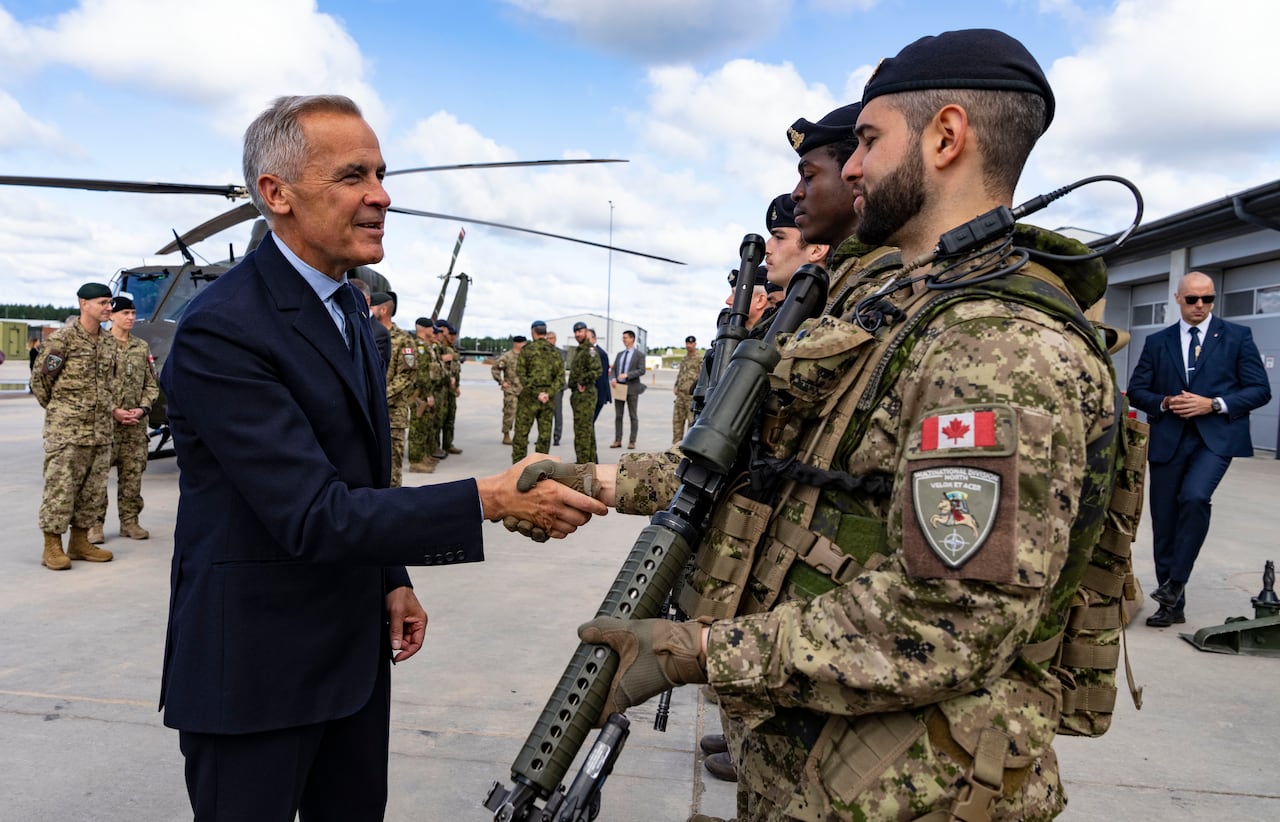
Prime Minister Mark Carney has committed to allocating $9 billion for defense by March 31, 2026. (Christinne Muschi/The Canadian Press)
However, there will still be a singular overall deficit figure, which is anticipated to be double or more than the $42 billion projected last year.
“That figure will be quite substantial,” remarked Argitis. “Carney argues that not all debt is equivalent. If you’re incurring debt to make investments, you might be less concerned about that. He’s attempting to shift the focus towards the quality of spending.”
“However, there are boundaries to how far he can push.”
Canadians have been cautioned that trade-offs will be necessary.
The senior government source indicated that there will be “transparency” regarding the cuts. Specifics will be provided beyond just percentages, detailing what the reductions entail for various programs and budget items.
Could the government fall?
At the same time, uncertainty looms over the likelihood that Carney’s first budget as prime minister will be approved by the House of Commons.
“There is a possibility that opposition parties genuinely do not wish to support this budget and might be prepared to take a risk on an election rather than appear aligned with the government,” explained Lori Turnbull, a political science professor at Dalhousie University.
Even the NDP, reduced to seven MPs and currently engaged in a leadership race, may hesitate to be seen as the party supporting the Liberals.
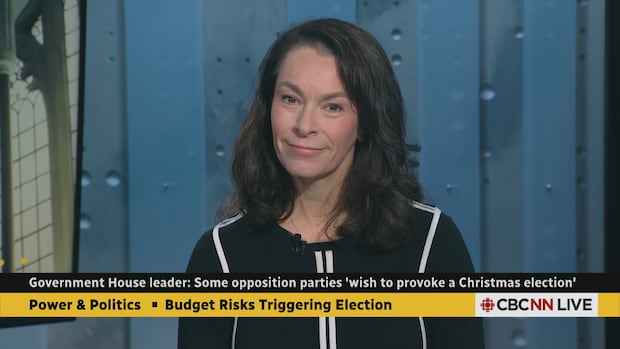
NDP MP Heather McPherson asserts that if Prime Minister Mark Carney seeks her party’s support for his forthcoming budget, he must avoid presenting an ‘austerity’ budget that would involve cuts to public services and essential programs for Canadians.
“Perhaps the NDP would prefer to distance themselves… rather than be associated with the budget. Ultimately, it hinges on what the Liberals are asking people to accept,” stated Turnbull.
Nonetheless, recent discussions between the finance minister and Bloc Québécois Leader Yves François Blanchet have sparked speculation that the Bloc might not oppose the budget.
“I believe the public sentiment against an election is quite strong,” Turnbull remarked.